Search for a Panchakarma retreat India and you will get a wall of resort listings: Kerala backwaters, a Himalayan spa, three meals, yoga at seven, a pool. We are not that. Vedic Panchakarma is a small, doctor-supervised, non-residential day-care clinic in Sarnath, on the edge of Varanasi. You come in for your therapy, you rest with us for as long as the procedure needs, and then you go back to wherever you have chosen to stay.
Better you know that now than in the fifth email. If you want a gated property where somebody brings herbal tea to a veranda, book Kerala. If you want classical Panchakarma prescribed and monitored by an Ayurvedic physician, at roughly a quarter of resort pricing, read on.
Quick answer
A Panchakarma retreat in India usually means a residential resort package. In Varanasi we run it differently: doctor-supervised day-care therapy at our Sarnath clinic, with you staying in your own guesthouse or hotel nearby, at a fraction of resort pricing.
- Seven days is the honest minimum; 14 to 21 days does more.
- Consultation is ₹500; the doctor quotes a full 7-21-day classical course after it. Ready packages start at ₹6,600 (Stress Relief, 3 sittings) and ₹9,999 (Complete Relief Rejuvenation, 4 sittings).
- Foreign patients can apply for an AYUSH (AY-1) or e-Medical visa.
- We issue the treatment-invitation letter that application needs.
- Nearest airport: Lal Bahadur Shastri International (VNS), Babatpur.
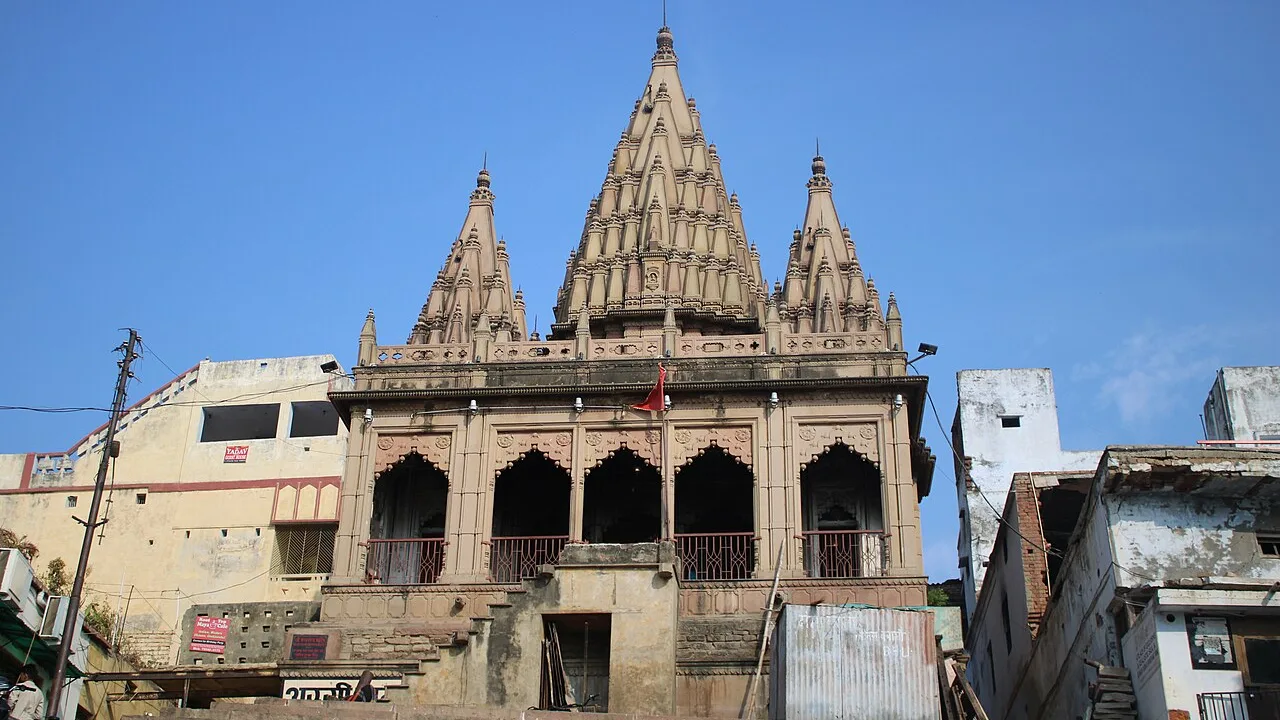
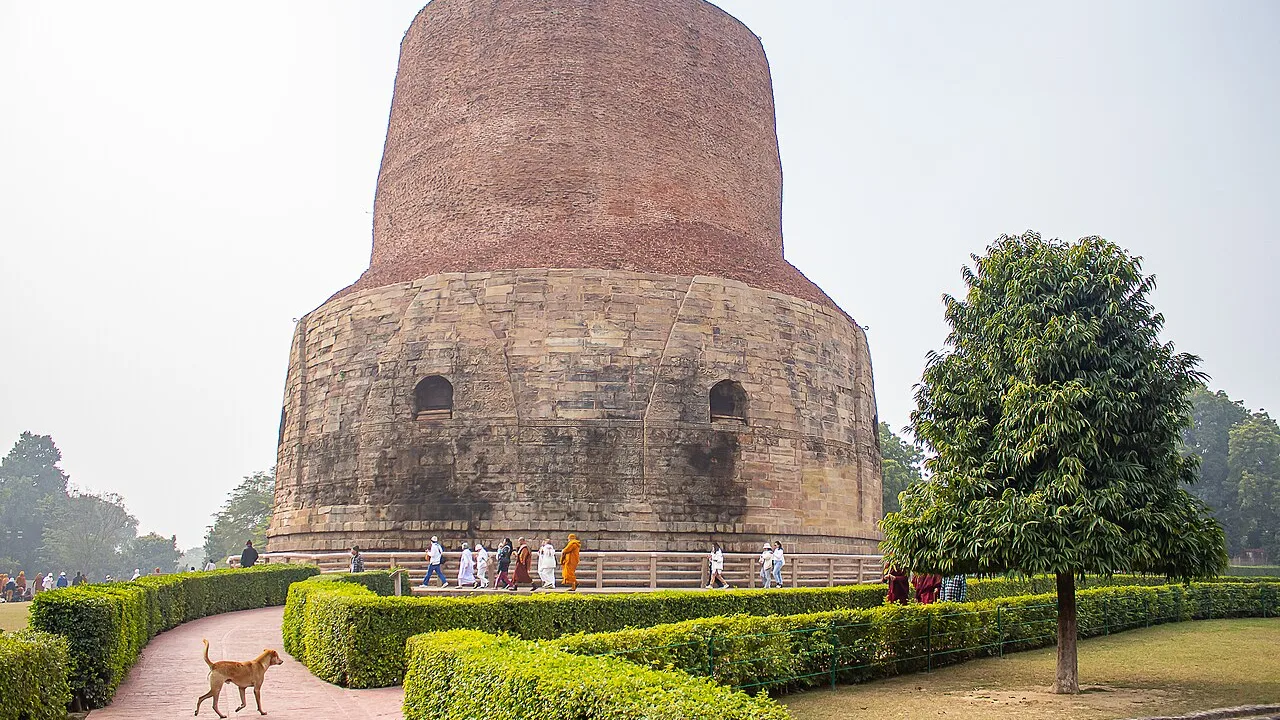
- Sarnath puts the Buddhist monuments a short walk from the couch.
What a day-care clinic gives you that a resort cannot
A residential retreat sells containment. Everything happens inside the compound, which genuinely helps if you are frail, travelling alone and anxious, or want no decisions to make for two weeks.
What it also does is wrap the medicine inside a hospitality product. You pay for the room, the kitchen, the grounds, the staff ratio and the marketing, and the therapy is one line item inside that. Our patients pay for the therapy.
The second difference is where you sleep. Here you sleep in a real city, and after your morning session you walk out into it. Sarnath is quiet, green and low-rise; if you would rather have the river, stay near the ghats and drive up.
The third is scale. Our doctor sees you, takes your pulse, adjusts your ghee dose, and knows what happened to you yesterday. That is easier to guarantee in a clinic with a handful of tables than in a property running forty guests through a therapy wing.

What Panchakarma actually involves, day by day
Classical Panchakarma is not a massage holiday. It is a staged procedure: preparation, one main purification, then a graded recovery. Skipping any of the three is the commonest error in commercial settings.
| Stage | Days | What happens | How you will feel |
|---|---|---|---|
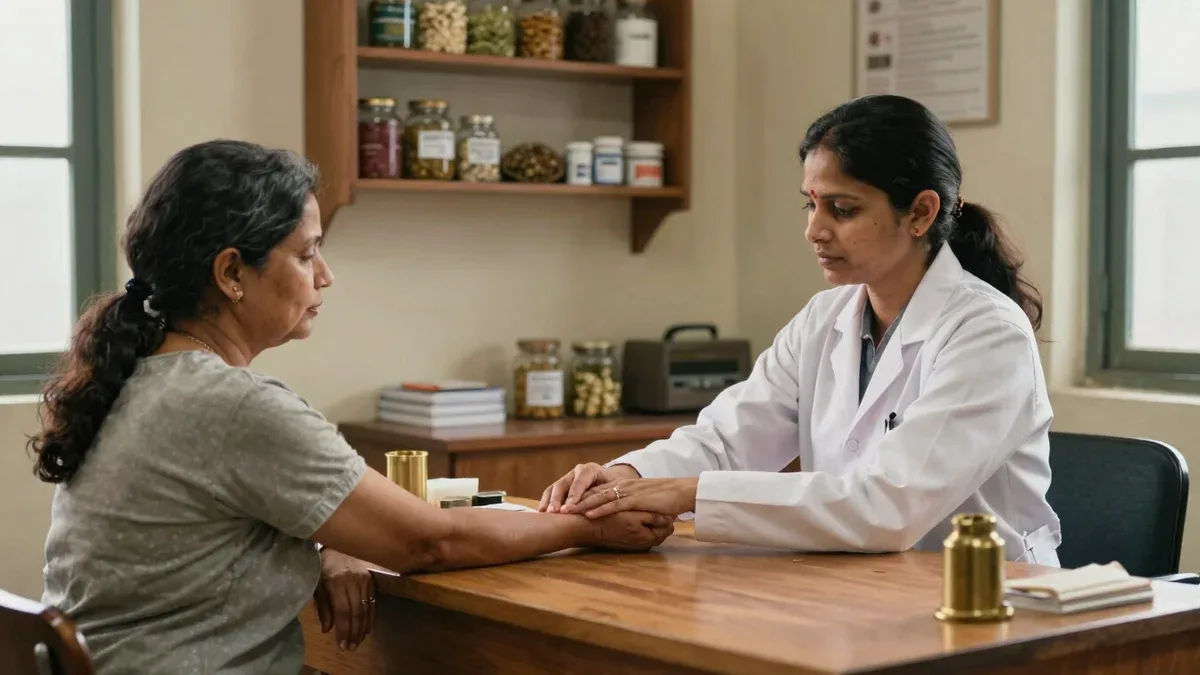
| Consultation | Day 0 or 1 | Nadi Pariksha (pulse diagnosis), Prakriti and Vikriti assessment, review of your reports, choice of procedure | Normal. Bring blood work and a medicine list |
| Deepana-Pachana | 2-3 days | Digestive preparation with bitter and pungent herbs to raise Agni (digestive fire) and start burning Ama | Light hunger, thinner stools, mild fatigue |
| Snehapana | 3-7 days | Internal medicated ghee in graded doses, taken early each morning, increased daily under supervision | Heavy, oily, slightly nauseated. This is the hardest part for most visitors |
| Abhyanga + Swedana | 2-3 days | Warm oil massage followed by herbal steam, to loosen the accumulated doshas and move them back towards the gut | Pleasant. Loose, warm, sleepy |
| Pradhana Karma | 1 day | The main procedure: Vamana (therapeutic emesis), Virechana (purgation), Basti (medicated enema), Nasya (nasal medication) or Raktamokshana (bloodletting) | Demanding. You will be at the clinic for hours and should not travel afterwards |
| Samsarjana Krama | 3-7 days | The graded diet ladder back to normal food: Peya, then Vilepi, then Yusha, then Mamsa Rasa or its vegetarian equivalent | Weak on day one, then noticeably clearer |
One Pradhana Karma is chosen per course, matched to your dominant dosha and your complaint. A centre offering all five in a week is selling a menu, not a protocol. Our Panchakarma treatment guide for Varanasi covers each procedure in detail.
Seven days is the honest minimum
You will see three-day and five-day retreats advertised. In three days you can have oil, steam and a beautiful room. You cannot complete Snehapana, run a Pradhana Karma and do Samsarjana Krama.
- 7 days (Shodhana): preparation, one purification, a short diet ladder. Realistic for a first visit or a short holiday. Expect a reset, not a transformation.
- 14 days: the useful middle, with room for a slower Snehapana, a proper Basti series and a full recovery week.
- 21 days: the classical shape. This is what the texts describe and what we recommend for chronic joint disease, long-standing skin conditions and stubborn metabolic problems.
Add two buffer days at the end before you fly. The day after a Virechana is not a day to sit in an aircraft.
Real prices, and what the same weeks cost elsewhere
| Service | Rate |
|---|---|
| First consultation (Nadi Pariksha + Prakriti assessment, 30-40 min) | ₹500 |
| Snehan (Abhyanga, full-body warm oil therapy) | ₹1,000 |
| Swedan (herbal steam) | ₹200 |
| Shiromarma Chikitsa + Shirodhara with kadha (herbal decoction) | ₹500 (30 min) / ₹1,000 (60 min) |
| Shiromarma Chikitsa + Shirodhara with oil | ₹1,000 (30 min) / ₹1,500 (60 min) |
| Stress Relief Rejuvenation, 3 sittings (Snehan, Swedan, Nasya, Shiromarma, Shirodhara) | ₹6,600 |
| Nasya, single sitting | ₹300 |
| Nasya + Gandush + Steam | ₹500 |
| Kati Basti / Janu Basti / Greeva Basti (per sitting) | ₹800 |
| Low Back & Sciatica / Knee / Cervical Care, 7 days | ₹9,500 |
| Digestive Gut Wellness, 4 sittings (Nabhi Basti, Niruh Basti) | ₹8,000 |
| Eye Care (Akshi Tarpan), 7 sittings | ₹8,000 |
| Patra Pinda Pottali Swed | ₹200 |
| Virechan, procedure fee (after doctor assessment) | ₹1,500 |
| Vaman, procedure fee (after doctor assessment) | ₹4,000 |
| Complete Relief Rejuvenation, 4 sittings | ₹9,999 |
| Classical 7-, 14- or 21-day Panchakarma course | Quoted by the doctor after consultation |
| Metabolic Weight Management, 12 sittings + yoga + diet plan | ₹24,000 |
2026 rates for our Sarnath clinic; see the full therapy price list and all packages. Your final plan depends on your Prakriti, your condition and the number of days advised after consultation. Call 96822 22121 to confirm current pricing.
For context, the insurer Star Health puts the national range at ₹30,000 to ₹90,000 for seven days, ₹90,000 to ₹1,70,000 for fourteen and ₹1,10,000 to ₹2,50,000 for twenty-one. International retreat marketplaces list India programmes from under a hundred US dollars a night to several thousand for a package.
Two honest qualifications. Our figures cover therapy, not your room and not your food. Varanasi accommodation is inexpensive, so even after three weeks of a modest guesthouse the total sits well below a resort fortnight.
The AYUSH visa, explained properly
India created a visa category specifically for people coming for traditional medicine. Almost nothing written for foreign patients explains it, so here is the shape of it.
- AY-1 is the patient visa, covering treatment under Ayurveda, Yoga and Naturopathy, Unani, Siddha and Homoeopathy.
- AY-2 is the attendant visa for a family member travelling with you.
- The same purpose exists in the online system as an e-Medical visa with the e-Ayush purpose, alongside an e-Medical Attendant option.
- A maximum of two attendants may accompany one patient.
- The e-AYUSH route was introduced on 27 July 2023.
What you must have in hand before applying:
- A letter from the treating centre on its letterhead, naming you, describing the proposed therapy and giving tentative admission dates. We issue this letter. Write to hello@vedicpanchakarma.com or WhatsApp 96822 22121 after your online consultation and we will prepare it.
- A passport valid for at least six months with at least two blank pages.
- A recent photograph and your supporting medical documents.
Fees, validity and entry rules change, sometimes at short notice, so we deliberately do not publish numbers here. Check the current position on the official India e-Visa portal before you book anything.
One exception worth stating: citizens of Nepal need no visa for India under the 1950 Treaty of Peace and Friendship. Our guide for patients travelling from Nepal covers the border crossing. Holders of an OCI card also do not need a separate treatment visa; see our planning guide for NRIs.
Getting to Varanasi
Lal Bahadur Shastri International Airport (VNS) at Babatpur sits about 26 km northwest of the city and roughly 32 km from our clinic, allow 50 to 60 minutes by the Ring Road. It carries direct international services to Sharjah, Bangkok and Kathmandu, though routes and frequencies shift season to season, so confirm before you build an itinerary around one.
Most visitors connect domestically. Delhi to Varanasi flies several times a day in about 1 hour 25 minutes; Kolkata to Varanasi is roughly 1 hour 30. By rail, the 22435/22436 Vande Bharat covers New Delhi to Varanasi in about eight hours via Kanpur Central and Prayagraj Junction, six days a week rather than seven.
On arrival, note one useful thing: Varanasi Cantt and Varanasi Junction are the same station (code BSB), about 10 to 12 km from us, 25 to 35 minutes. Sarnath sits just off the Ring Road at Ashapur, so traffic from the airport, from the east and from the north reaches us without crossing the crowded old city at Godowlia.
Where to stay, honestly
We do not run rooms and take no commission from anyone who does, so what follows is description, not recommendation.
- Sarnath has guesthouses, small hotels and pilgrim lodgings attached to several international Buddhist temples. Quiet, walkable, closest to us, thinnest on restaurants.
- Cantt and the Mall Road side has the most conventional hotels and the easiest airport and station access, roughly half an hour from the clinic.
- Assi and the southern ghats suit people who want the river at dawn. Add 35 to 45 minutes each way, fine on a Shirodhara day and tiring on a Snehapana morning.
Tell us your dates and budget and we will suggest options, including which choice will make your therapy mornings harder. Our Sarnath clinic page describes the immediate neighbourhood.
Food, water and your stomach
Panchakarma comes with a prescribed diet, which does most of the work of keeping you safe. Still, first-time visitors get caught by the same few things.
- Drink bottled or properly filtered water only, and check the seal. Use it for brushing your teeth in the first week.
- Skip ice, raw salads and cut fruit from stalls, especially during Snehapana when your digestion is deliberately being manipulated.
- Warm, freshly cooked, simple vegetarian food is both the Ayurvedic instruction and the safest practical choice. Varanasi is unusually good at it; see our guide to sattvic eating in the city.
- Carry oral rehydration salts. Fever or blood in the stool is not a Panchakarma reaction and needs a hospital, not a herb.
Seasons, and which procedure suits which
Ritucharya, the seasonal routine, is not decoration. Classical practice pairs each purification with the season in which the relevant dosha naturally accumulates, and Varanasi’s climate makes the logic obvious.
| Season | Months | Weather here | Procedure favoured |
|---|---|---|---|
| Vasanta (spring) | Mar-May | Warming fast, dusty, pollen | Vamana for Kapha: asthma, allergy, sinus, weight |
| Grishma (summer) | May-Jun | Very hot, often above 40°C | Poor month to travel for therapy; palliative work only |
| Varsha (monsoon) | Jul-Sep | Humid, heavy air, joints ache | Basti for Vata: back, joints, neurological, constipation |
| Sharad (autumn) | Sep-Nov | Clear, warm days, cooler nights | Virechana for Pitta: skin, acidity, liver, migraine |
| Hemanta and Shishira (winter) | Nov-Feb | Cool, foggy mornings, poor air on bad days | Strengthening therapies, oleation, Rasayana |
For most international visitors the comfortable window is October to March, and October to November is the best of it: monsoon cleared, good light, festivals on, and Virechana season besides. January mornings are cold and foggy, and winter air quality is not always kind, which we cover in our winter fog guide.
Packing, language and what happens in the room
Bring loose cotton clothes you do not mind ruining, because medicated oil never comes out. Old underwear, for the same reason. A shawl for winter mornings, sandals you can slip off, your medicines in original packaging with a doctor’s note, copies of recent blood work, and a socket converter.
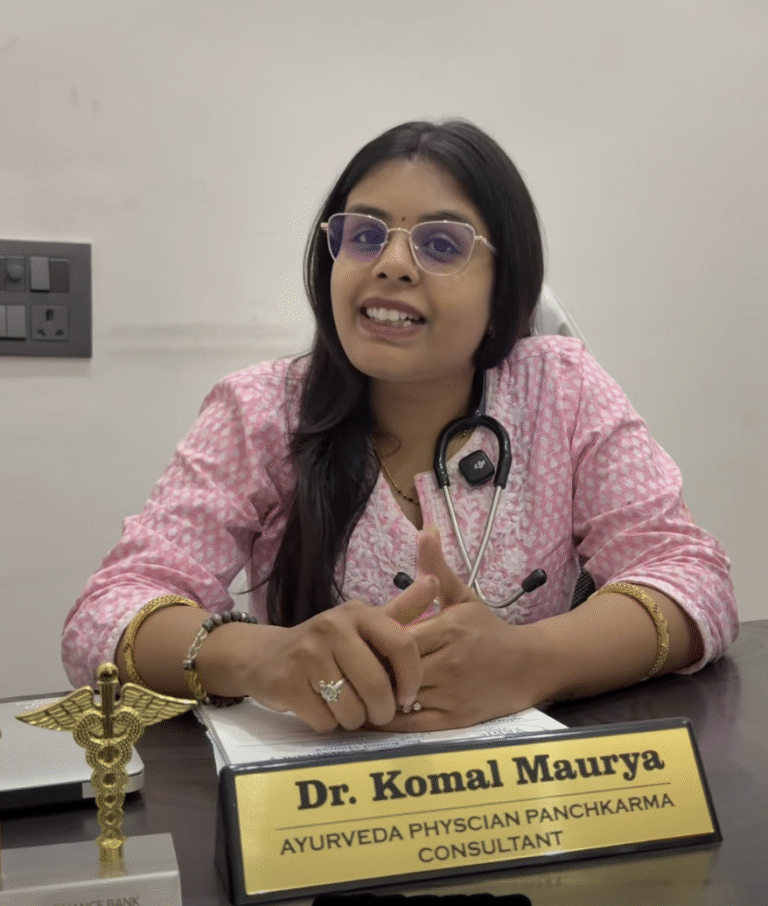
Dr. Komal Maurya, BAMS, consults in English as well as Hindi and Bhojpuri, and therapists speak working English for the practical instructions. Female patients are attended by female therapists. You will undress to your underwear for Abhyanga, you will be draped, and you may stop a session at any point without explaining why.

What the evidence does and does not say
We would rather you arrive with accurate expectations. One of the more useful studies of Panchakarma is a 2016 controlled study in Scientific Reports (Nature), in which 65 healthy adults completed a six-day residential Panchakarma programme and were compared with 54 controls; the treated group showed measurable shifts in plasma phosphatidylcholines and sphingomyelins. The authors note the assignments did not follow a strict randomisation, and enrolment was self-selected. That paper is open access and worth ten minutes of your time.
It shows a measurable metabolic change after a short intensive programme. It does not show a cure for any named disease. Much of the wider evidence base is small and of low certainty, a point CCRAS makes in its own publications, and the WHO benchmarks for Ayurveda training exist partly to raise that floor.
For scale, India’s medical and wellness tourism sector was worth about US$8.7 billion in 2025 and is projected to reach US$16.2 billion by 2030, on 507,244 medical-purpose arrivals in 2025. You are not doing anything unusual. You are doing it in a city that traffic overlooks.
Who should not start Panchakarma without extra assessment
Some people should not begin a purification course at all, or should only do so after specific clearance. Please read this before you book flights.
- Pregnancy and the immediate post-partum period
- Children under 12 and very frail elderly patients
- Acute fever or any active infection
- Uncontrolled diabetes or uncontrolled hypertension
- Surgery within the last three months
- Active cardiac disease
- Severe anaemia, bleeding disorders, or treatment with blood thinners
- Active cancer treatment
- Severe dehydration or extreme weakness
Tell our Ayurvedic physician every allopathic medicine you take. Panchakarma is never a reason to stop prescribed medication.
Questions international visitors ask us
Do I need an AYUSH visa to come to India for Panchakarma?
If you are coming primarily for treatment, the AY-1 patient visa or the e-Medical visa with e-Ayush purpose is the correct category, and it requires an invitation letter from the treating centre with tentative dates. We issue that letter. Confirm current requirements on the official e-Visa portal, because rules change.
How many days do I need for a Panchakarma retreat?
Seven days is the minimum at which a complete Shodhana can be done properly, 14 days is comfortable, and 21 days is the classical course. Add two rest days before flying home.
Is a non-residential clinic worse than a residential retreat?
It is different. A residential programme controls your food and sleep, which suits frail or anxious patients. A day-care clinic costs far less and puts the money into the medicine rather than the room.
What is the best season for Panchakarma in Varanasi?
October to March for comfort. Autumn suits Virechana, monsoon suits Basti, and spring suits Vamana, so the ideal month partly depends on your condition.
Will I be able to sightsee during treatment?
On most days, yes, in a gentle way. On the main procedure day and the first day of Samsarjana Krama, no. Our seven-day Kashi itinerary shows which days are free.
Can my partner come with me?
Yes. Up to two attendants can travel on the attendant category, and we can name them in the invitation letter. Many partners simply book a normal tourist visa and treat it as a holiday.
Do you provide meals?
We do not have a kitchen. We give you a written diet for each stage, including the Samsarjana Krama ladder, and we will show you where near your accommodation you can get it cooked properly.
What if I fall ill during the course?
Tell us at once. Mild fatigue, loose stools and emotional wobbliness are expected. Fever, severe pain, breathlessness or bleeding are not, and we will send you to hospital rather than treat through them.
Can I book everything before I arrive?
You can book a video consultation and a provisional plan. The final protocol is fixed after an in-person Nadi Pariksha, because pulse, tongue and abdomen tell us things a call cannot.
Medical disclaimer: This page is for general information and does not replace a personal consultation. Ayurvedic therapies are prescribed after individual assessment. Do not stop or change any prescribed medication on the basis of this page. If you have a medical emergency, contact a hospital immediately.
Reviewed by Dr. Komal Maurya, BAMS, Vedic Panchakarma, Sarnath, Varanasi.
Watch: A patient shares her experience at our clinic
Send us your dates and your reports
Tell us when you can travel and what you are dealing with, and we will tell you honestly how many days you need, what it will cost, and whether Panchakarma is the right thing for you at all. If it is, we will prepare your visa invitation letter.
Vedic Panchakarma
Old RTO Chauraha, Sarnath, Varanasi 221007
Open 9:00 AM to 8:00 PM, every day