
A stiff neck that will not turn fully while reversing the car, a heavy ache between the shoulder blades after a day at the laptop, or tingling that creeps down into the fingers: these are the everyday signs of cervical strain. The Cervical (Neck) Care Programme is our 7-day Ayurvedic course for the neck and upper shoulders, available for ₹9,500 at Vedic Panchakarma in Sarnath.
Quick answer
The Cervical (Neck) Care Programme is a ₹9,500, 7-day course at Vedic Panchakarma, Sarnath, Varanasi, in which daily Greeva Basti, neck-and-shoulder Snehan, Patra Pinda Swed and Nadi Swed are given for neck pain, cervical spondylosis and pain spreading into the shoulder or arm.
- 7 sittings on 7 consecutive days
- ₹9,500 total, including one doctor consultation
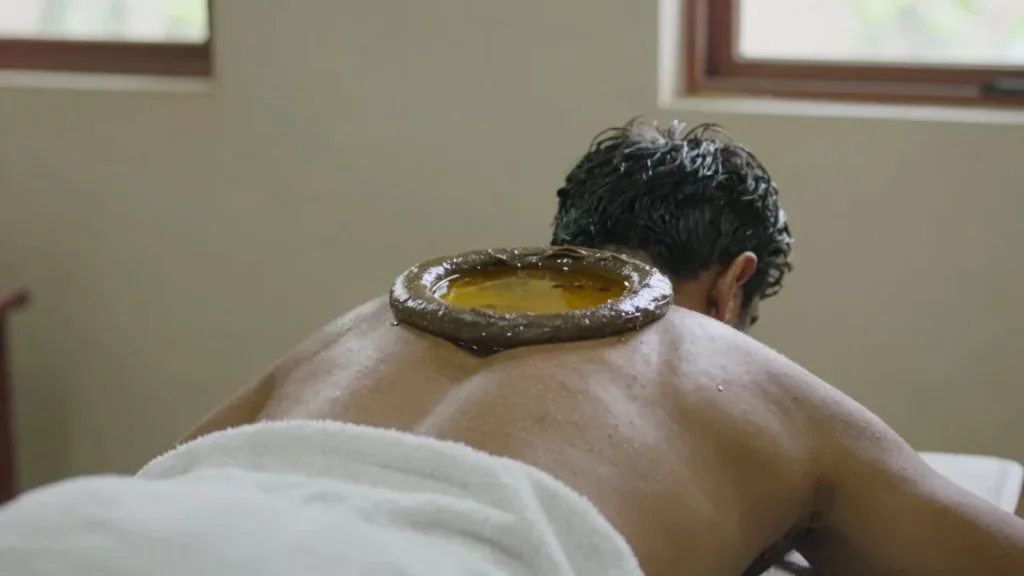
- Main therapy: Greeva Basti, warm oil pooled over the back of the neck
- Around 70-85 minutes per visit
- Morning and evening slots, 9 AM to 8 PM, all seven days
Is this neck programme right for you?
The cervical spine is made up of seven small vertebrae carrying the weight of the head, which is roughly five kilograms. When the head drifts forward over a phone or screen, the load on these joints and the surrounding muscles rises sharply. Over the years this can show up as cervical spondylosis (Greeva Graha or Manyastambha in Ayurvedic terms).
The programme is commonly chosen by:
- IT professionals, bank staff and students preparing for competitive exams who spend long hours looking down
- Tailors, embroidery and Banarasi saree weavers who work with the head bent forward
- People who wake up with a stiff neck or a “catch” when they turn their head
- Those with pain radiating to one shoulder, the upper arm or the fingers
- Patients with an X-ray showing cervical spondylosis or reduced disc space
If the pain is mostly in the lower back or legs, look at the Low Back & Sciatica Care Programme. Neck pain that comes together with headaches, poor sleep and constant worry may need a different emphasis, and the doctor may discuss the Stress Relief Rejuvenation package alongside or instead.
Inside a typical sitting
You will be seated or lying face down, depending on the step. The therapies are always given in this order.
Localised Snehan: neck, shoulders and upper back (15-20 minutes)
Warm medicated oil is massaged into the back of the neck, the trapezius muscles on top of the shoulders and the area between the shoulder blades. Special attention goes to the knots that form where the neck meets the shoulders.
Greeva Basti (30-35 minutes)
Lying face down with your forehead supported, a small reservoir of urad dough is fixed around the lower neck. Lukewarm herbal oil fills this reservoir and is gently refreshed so it stays at an even warmth. The posture is comfortable, and the therapist checks on you throughout.
Patra Pinda Swed (15 minutes)
Leaf-filled potlis, warmed in oil on a pan, are tapped and rolled over the neck, shoulders and down the arm if you have radiating pain. The fragrance of the herbs and the moist heat ease muscle guarding.
Nadi Swed (about 10 minutes)
A gentle jet of herbal steam is moved over the neck and shoulders to complete the sitting. Afterwards you rest for a few minutes before getting up slowly.
Sitting-by-sitting schedule
| Sitting | What is done | Approx. time |
|---|---|---|
| 1 | Consultation with Nadi Pariksha and neck movement check; first full sequence | About 1 hour 45 minutes |
| 2 | Snehan, Greeva Basti, Patra Pinda Swed, Nadi Swed | 70-85 minutes |
| 3 | Full sequence; pillow and screen-height advice discussed | 70-85 minutes |
| 4 | Full sequence; potli extended to arm if tingling persists | 70-85 minutes |
| 5 | Full sequence | 70-85 minutes |
| 6 | Full sequence; gentle neck mobility exercises taught | 70-85 minutes |
| 7 | Final sequence and a written home routine | 70-85 minutes |
How your neck may respond
Patients often say the first change they notice is the ability to turn the head a little further without a pull. Shoulder heaviness frequently eases within the first half of the week. Tingling and numbness in the arm, where present, tend to respond more slowly and may need follow-up care.
Think of the programme as support for flexibility, muscle comfort and local circulation rather than a fix for bony changes on an X-ray. Results vary with age, how long the problem has been present and how well work posture changes afterwards.
Food and routine while you are on the programme
A warm, well-cooked diet is advised so that digestion stays steady and Vata is not aggravated:
- Choose moong dal, lauki or tori sabzi, and soft phulkas with a little ghee
- Have a small bowl of warm vegetable soup or dal paani in the evening instead of fried namkeen
- Take herbal tea with tulsi and ginger in place of a third or fourth cup of strong chai
- Avoid curd at night and ice-cold drinks after the sitting
At home, raise your laptop or monitor so the top of the screen is at eye level, and hold your phone up instead of bending over it. Use a single, medium-height pillow. Keep a light scarf (dupatta or muffler) over the neck when riding a two-wheeler, especially in the Varanasi winter, and avoid heavy shoulder bags.
Precautions before starting
Please let the doctor know if any of the following apply, as the plan may need to be changed or postponed:
- Pregnancy
- Fever, cold with body ache, or a skin rash on the neck
- A recent neck injury, fall or surgery
- Sudden severe dizziness, blurred vision, slurred speech or weakness in a limb; these require emergency medical care
- Uncontrolled blood pressure
An old X-ray or MRI of the neck, if you have one, is very useful at the consultation.
Cost and inclusions
The Cervical (Neck) Care Programme is ₹9,500 for all 7 sittings. Included are Greeva Basti × 7, localised Snehan × 7, Patra Pinda Swed × 7, Nadi Swed × 7 and a doctor consultation. Herbal tablets or oils for home use are not part of the package price; when needed, they are prescribed separately. Single-therapy rates are listed on our pricing page, and you can compare other joint courses on the packages page.
Choose how you pay
Same therapies, same doctor, same time per sitting. Full package: pay ₹9,500 once and save ₹1,700 (15%). Day-wise: ₹1,600 per day, paid at each visit.
Booking your neck care course
Book an initial consultation with Nadi Pariksha (₹500) with Dr. Komal Maurya. She will examine neck movement, ask about your work and sleep, and confirm the plan. You may begin the first sitting right after, or on any day of the week, since the clinic is open daily from 9 AM to 8 PM. WhatsApp 96822 22121 with your preferred time. You can also read about our wider work with joint and spine pain in Varanasi.
Frequently asked questions
What is the cost of cervical spondylosis treatment in Ayurveda at your Varanasi clinic?
The Cervical (Neck) Care Programme costs ₹9,500 for 7 sittings, with one doctor consultation included. Medicines for home use, if prescribed, are extra.
How many days does Greeva Basti take?
This programme runs for 7 consecutive days, with Greeva Basti given at every sitting. Each visit lasts roughly 70-85 minutes.
Can I drive or go to the office after a sitting?
Yes. Rest for a few minutes after the steam, keep your neck covered, and you can return to normal work the same day.
Will it help pain and tingling going into my arm?
Many patients find shoulder and arm discomfort eases as the neck muscles relax, though tingling can take longer. Persistent or worsening numbness should also be checked by a neurologist.
Are there any side effects of Greeva Basti?
It is generally well tolerated. A few people feel mild tiredness or heaviness on the first day, which usually passes; tell the therapist if the oil ever feels too warm.
Can I take my regular allopathic medicines during the programme?
Yes, continue medicines prescribed by your doctor unless they advise otherwise. Bring the list to your consultation so the therapy can be planned safely.
Ask about this package
Tell us where your neck pain spreads and we will help you plan the week.
Medical note: this programme is meant to support neck comfort and mobility and does not substitute for evaluation by a spine specialist or neurologist when symptoms are severe. Each person responds differently. Reviewed by Dr. Komal Maurya, BAMS.