Migraine ayurvedic treatment aims to cut how often attacks come and how hard they hit, not just to numb one headache. Ayurveda calls one-sided migraine Ardhavabhedaka and treats it with three things together: head therapies such as Nasya (medicated nasal drops) and Shirodhara (a warm stream over the forehead), herbal medicines chosen for your dosha, and a trigger-aware diet and daily routine.
The research is promising but small, so we treat it as a supervised trial, measured in headache days per month. Below you will find what each therapy does, what the studies actually show, a migraine diet, prices at our Sarnath clinic in Varanasi, and the warning signs that need a hospital, not a clinic.
What is migraine in Ayurveda (Ardhavabhedaka)?
In Ayurveda, migraine is closest to Ardhavabhedaka, which means “pain that splits half the head”. Classical texts describe sharp, pricking, one-sided pain that comes in episodes. A 2022 review of clinical evidence says Vata is the main dosha involved, sometimes joined by Kapha, and notes overlap with Amlapitta (hyperacidity).
Modern medicine describes migraine as a throbbing, often one-sided headache with nausea and sensitivity to light and sound, lasting 4 hours to 3 days. Some people get an aura first: zigzag lines, flashing lights or tingling. The two views fit well. Ayurveda simply adds a question: which dosha is driving your attacks?
Which dosha is behind your migraine?
Most migraines are Vata-led, but the pattern of pain, the timing and the triggers tell the doctor which dosha joins it. This matters because the oil for Nasya, the liquid for Shirodhara and the diet all change with the dosha. Many patients are a mix.
Not sure of your type? Our free dosha quiz is a useful start, though the final call comes from Nadi Pariksha (pulse reading) at consultation.
Ayurvedic therapies for migraine: Nasya, Shirodhara and more
The main Ayurvedic therapies for migraine are Nasya, Shirodhara, Shiro Abhyanga (head oil massage), and in selected patients Virechana. Nasya has the most research. Shirodhara mainly helps the stress and poor-sleep side of migraine. Each is chosen after a consultation, never off a menu.
Nasya: the core migraine therapy
Ayurveda calls the nose the doorway to the head. In Nasya, warm medicated oil or ghee is placed in each nostril after face and neck massage with mild steam. It takes 30 to 40 minutes with preparation, and the classical course is 7 days. The 2022 review found Nasya was the most studied therapy for migraine, used in 8 of its 12 studies.
At our clinic, Pitta-type migraine usually gets ghee-based Nasya, while a blocked, heavy Kapha head gets a cleansing oil. You can read the full procedure on our Nasya treatment in Varanasi page, or in Hindi at नस्य कर्म.

Shirodhara for migraine
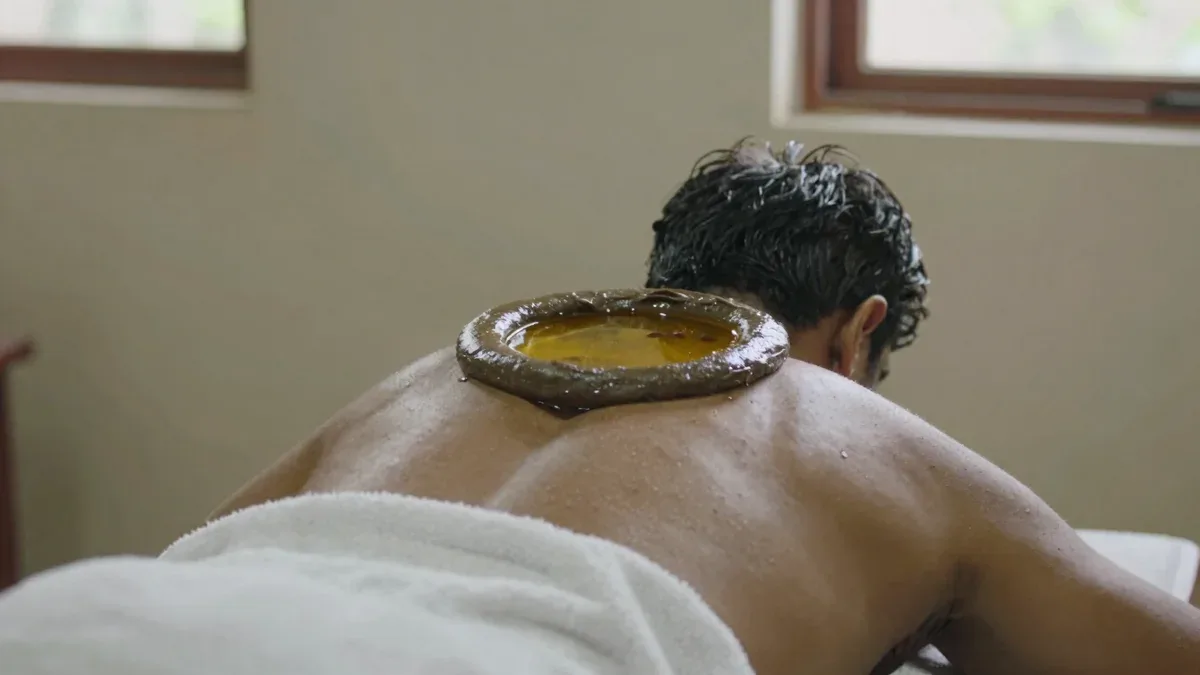
Shirodhara is a slow, unbroken stream of warm oil or herbal decoction (kadha) over the forehead for about 45 minutes. It calms a busy mind and deepens sleep, two of the biggest migraine triggers. In the one trial the 2022 review found, Shirodhara alone helped less than Nasya, but the two together gave the best result.
One important rule: we do not start Shirodhara during an acute attack. It is for the weeks between attacks. Details, oils and session flow are on our Shirodhara in Varanasi page.

Supporting therapies
- Shiro Abhyanga and Shiromarma Chikitsa: head and marma-point work that eases tension across the scalp, temples and neck.
- Greeva care: when pain climbs from a stiff neck, neck therapies help. Our Cervical Care Programme covers this.
- Virechana: a classical purgation for strong Pitta. It is done only after the doctor confirms you are fit for it.
- Oral herbs: prescribed only after consultation, matched to your dosha and your other medicines.
Ayurvedic and modern migraine care compared
Ayurveda and modern medicine do different jobs in migraine. Painkillers and triptans stop an attack; preventive medicines lower frequency. Ayurveda works mostly on prevention through therapy, diet and routine. They can run side by side, and you should never stop a prescribed medicine to start Ayurveda.
| Point | Ayurvedic care | Modern (allopathic) care |
|---|---|---|
| Main goal | Fewer, milder attacks over months | Stop the attack; prevent with daily tablets if frequent |
| Typical tools | Nasya, Shirodhara, herbs, diet, daily routine | Painkillers, triptans, anti-nausea and preventive drugs |
| Speed | Gradual; judged over 4 to 12 weeks | Fast relief during an attack |
| Evidence | Small, mostly unblinded studies | Large controlled trials |
| Main risks | Low with supervision; some therapies unsuitable in pregnancy or fever | Side effects; painkiller overuse can cause more headaches |
| Best use | Alongside your doctor’s plan, never instead of urgent care | Diagnosis, emergencies, acute attacks |
What does the research say about Ayurveda for migraine?
Research on Ayurveda for migraine shows encouraging results, but the studies are small and not strong enough to prove it works for everyone. We would rather you hear this from us. A fair summary is: worth a supervised trial, measured honestly, not a guaranteed cure.
- A 2022 narrative review in the Journal of Family Medicine and Primary Care found 12 studies. Most were small, none were double-blinded, and the authors called for better-designed trials.
- A 2010 study followed 204 people with migraine without aura who finished a 90-day herbal, diet and lifestyle plan. 35.2% reported full resolution of headaches. But only about half of those enrolled completed it, and there was no control group.
So at our clinic we count headache days per month in writing before and after a course. If nothing moves after a fair trial, we change the plan rather than sell another course.
Migraine diet and trigger plan in Ayurveda
A migraine diet in Ayurveda is about regular, warm, easy-to-digest meals that do not provoke your dosha. Skipping meals, late nights and dehydration are among the most common triggers. The WHO lists alcohol, sleep disruption and certain foods, and advises keeping a headache calendar to find your own triggers.
| Favour | Limit or avoid |
|---|---|
| Meals at fixed times, never skip breakfast | Long gaps without food, especially for Pitta types |
| Warm khichdi, moong dal, rice, cooked vegetables | Very spicy, sour, fried or fermented food |
| A spoon of cow ghee in food (if your doctor agrees) | Leftover, reheated and packaged food |
| Plenty of water; coconut water in summer | Alcohol and too much tea or coffee |
| Soaked raisins, sweet fruits, pomegranate | Aged cheese, chocolate and pickles, if your diary links them to attacks |
Daily habits count just as much. Sleep by 10:30 PM, wake at a fixed time, avoid midday sun without a cap, and take short screen breaks. In Varanasi, the long walk in May heat and fasting days are two triggers we hear about often. Carry water and a small snack.
Simple home steps between attacks
- Keep a diary: date, time, food, sleep, period, stress and pain score.
- Gentle pranayama such as Anulom Vilom and Bhramari for 10 minutes daily.
- During an attack, rest in a dark, quiet room and take the medicine your doctor advised.
- Avoid painkillers on more than 2 days a week; the NHS warns this can cause more headaches.
How migraine treatment works at our Varanasi clinic
At Vedic Panchakarma in Sarnath, migraine care starts with a ₹500 consultation with Nadi Pariksha, then a written plan with the exact cost. It is day-care only: you come for your session, rest, and go home the same day. Bring your prescriptions and any scans.
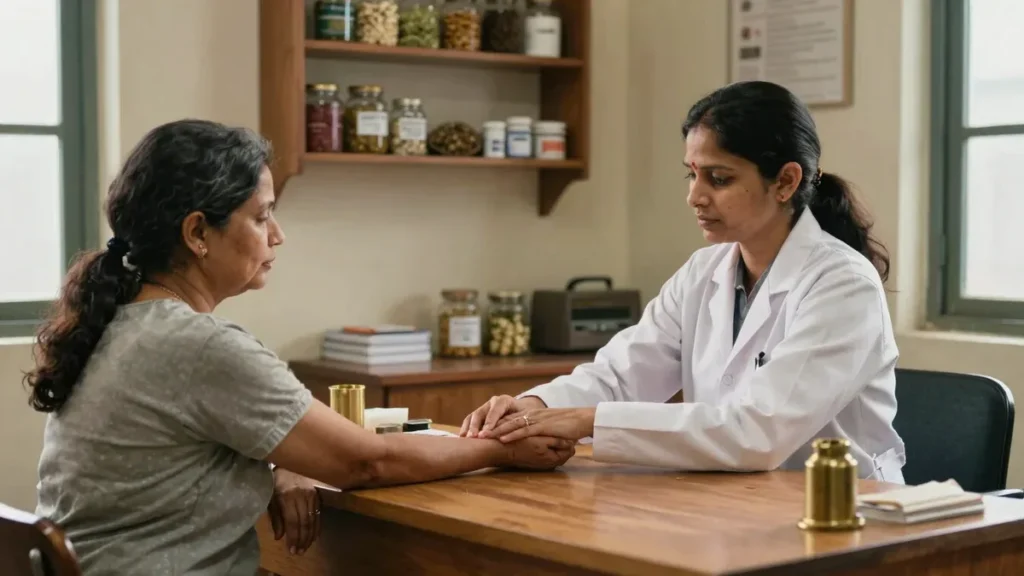
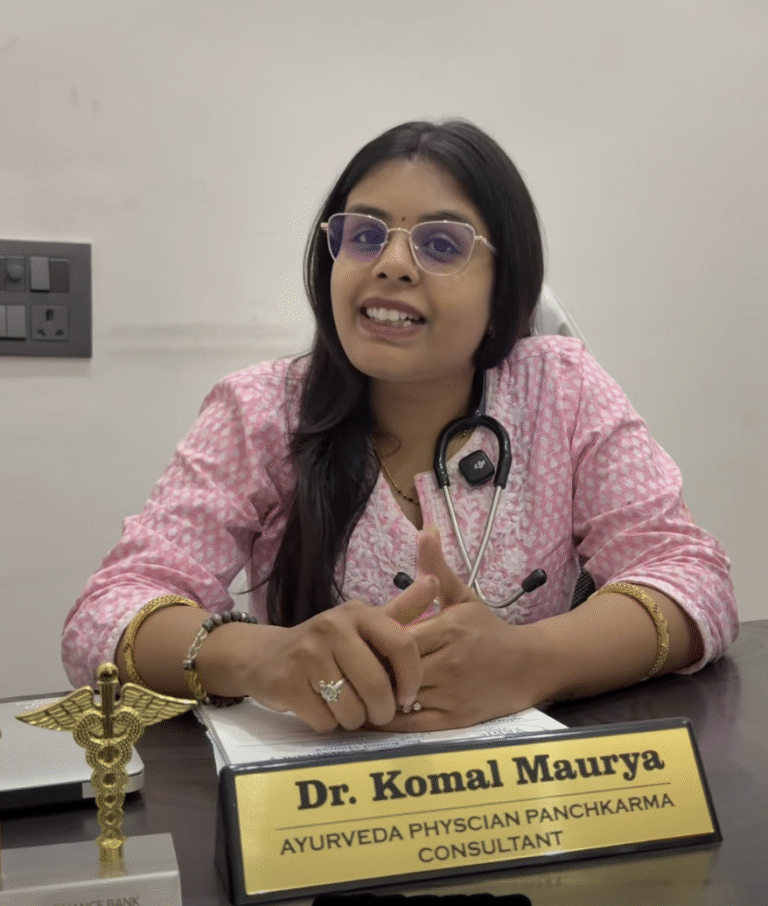
- Consultation Dr. Komal Maurya takes your history, reads the pulse, checks your medicines and rules out red flags.
- Dosha and trigger map She notes the pain pattern, timing and triggers, and starts your headache diary.
- Therapy course Usually Nasya, often with Shirodhara and head massage, over about 7 sittings between attacks.
- Diet and routine A written diet and sleep plan matched to your dosha; herbs only if needed.
- Review Headache days per month are compared about a month after the course. The plan is changed if nothing moves.
Patients often tell us they value the time taken to explain things. Shreya S. wrote in her Google review that the doctor “listens to every concern patiently and explains everything clearly”. Virendra K., who tried Shirodhara, called the sessions “very relaxing and refreshing”. The clinic holds a 4.9★ rating from 74 Google reviews.
Migraine treatment cost in Varanasi
At our Sarnath clinic, a single Nasya sitting is ₹300 and Shirodhara starts at ₹500 for 30 minutes with kadha. For migraine with stress and poor sleep, many patients choose the 3-sitting Stress Relief Rejuvenation package at ₹6,600. The first consultation is ₹500.
| Option | Price |
|---|---|
| First consultation with Nadi Pariksha | ₹500 |
| Nasya, single sitting | ₹300 |
| Nasya with Gandush and steam, per sitting | ₹500 |
| Shirodhara with Shiromarma Chikitsa (kadha) | ₹500 (30 min), ₹1,000 (60 min) |
| Shirodhara with Shiromarma Chikitsa (oil) | ₹1,000 (30 min), ₹1,500 (60 min) |
| Stress Relief Rejuvenation (Snehan, Swedan, Nasya, Shiromarma, Shirodhara) | ₹6,600 for 3 sittings, or ₹2,550 per day |
| Complete Relief Rejuvenation (when fatigue and body ache join in) | ₹9,999 for 4 sittings, or ₹2,900 per day |
Oral medicines are extra and the doctor tells you the cost before prescribing. See the full therapy price list, or read more about Dr. Komal Maurya before you book.
Who should not start, and when to go to hospital
Most adults can try Ayurvedic migraine care safely under supervision, but some should wait or get checked first. Nasya is not given in fever, on a full stomach or in pregnancy, and some headaches are emergencies that need a hospital today.
Go to emergency care at once (do not drive yourself) if you have: a sudden, extremely painful headache; weakness or numbness on one side of the face or body; trouble speaking or confusion; loss of vision or double vision; a seizure; high fever with a stiff neck; or a headache after a head injury. See a doctor soon if an attack lasts over 72 hours, aura lasts over an hour, or you are pregnant or just had a baby.
Also tell us if you are on blood thinners, have uncontrolled blood pressure or diabetes, or had surgery in the last three months.
Frequently asked questions
Can Ayurveda cure migraine permanently?
We do not promise a permanent cure. Migraine is a long-term tendency. Ayurveda aims to reduce how often and how badly attacks come, through Nasya, Shirodhara, diet and routine. Small studies report fewer headache days, and many people need fewer painkillers, but results vary and larger trials are still needed.
Which Ayurvedic treatment is best for migraine?
Nasya, medicated nasal drops, is the most studied Ayurvedic therapy for migraine. It is often combined with Shirodhara for stress and sleep triggers, and with a dosha-based diet. The best plan depends on whether your migraine is Vata, Pitta or Kapha led, which a doctor decides after Nadi Pariksha.
Is Shirodhara good for migraine?
Shirodhara can help migraine linked to stress, anxiety and poor sleep. It calms the mind and deepens rest. In one trial, it helped less than Nasya alone but worked best combined with Nasya. It is given between attacks, not during an acute migraine, and usually as a course of several sittings.
What foods trigger migraine according to Ayurveda?
Ayurveda links attacks to skipped meals, very spicy, sour, fried or fermented food, leftovers, alcohol and too much tea or coffee. Pitta types react to heat and hunger; Vata types to dry, cold food and irregular meals. A headache diary is the best way to find your personal triggers.
How many Nasya sessions are needed for migraine?
The classical Nasya course is 7 days, sometimes repeated after a gap. Each sitting takes 30 to 40 minutes. Migraine change is best judged about a month after the course ends, by counting headache days per month, because attacks come in cycles and one good week can mislead.
Can I take Ayurvedic treatment with my migraine tablets?
Yes, in most cases. Keep taking your prescribed medicines, including triptans and preventive tablets. Bring the packets to your consultation so herbs can be chosen safely alongside them. Any reduction in tablets should happen slowly and only with the doctor who prescribed them.
What is Ardhavabhedaka?
Ardhavabhedaka is the Ayurvedic term closest to migraine. It means pain that splits half the head. Classical texts describe sharp, pricking, one-sided headache that comes in episodes, mainly from vitiated Vata, sometimes with Kapha or Pitta. Treatment focuses on the head through Nasya and supporting therapies.
The bottom line
Migraine ayurvedic treatment works best as steady prevention: Nasya for the head, Shirodhara for stress and sleep, and a regular, trigger-aware diet and routine. The evidence is encouraging but still small, so judge it by your headache diary, keep your doctor in the loop, and never ignore red-flag symptoms.
If you live in Varanasi, eastern UP or Bihar, or are visiting, our migraine plans are open every day from 9 AM to 8 PM at Old RTO Chauraha, Sarnath. Message us on WhatsApp to book your ₹500 consultation.
Talk to us before you book
Call or WhatsApp us, every day 9 AM to 8 PM. Tell us your concern and we will suggest the right therapy or package and the cost before you visit.
Book on WhatsAppConsultation ₹500 with Nadi Pariksha · Open daily 9 AM to 8 PM
This article is general information and does not replace a personal consultation. Ayurvedic therapies are prescribed after individual assessment. Do not stop or change any prescribed medicine on the basis of this page. A sudden severe headache, weakness on one side, confusion, vision loss or a seizure needs emergency care immediately.
Sources
- World Health Organization, Migraine and other headache disorders (fact sheet) (2025)
- Soman A. et al., Ayurveda for management of migraine: A narrative review of clinical evidence, Journal of Family Medicine and Primary Care (2022)
- Vaidya P.B. et al., Response to Ayurvedic therapy in the treatment of migraine without aura, International Journal of Ayurveda Research (2010)
- NHS, Migraine: symptoms, triggers and when to get help (2026)
Get the Vedic Panchakarma app
Special offer for everyone who downloads the app and books or takes a treatment.