What is Panchakarma? A Complete Beginner’s Guide to Ayurveda’s Detox System
Medical Disclaimer
This content is for educational purposes only and not medical advice. Always consult a qualified physician or Ayurvedic practitioner before starting Panchakarma, especially if you are pregnant, recovering from surgery, or managing a health condition.
Consult a practitioner
What is Panchakarma? It is a structured Ayurvedic approach that uses selected purification procedures, preparation, and post-treatment care under qualified practitioner guidance. Unlike a general Ayurvedic detox, Panchakarma is not simply massage, fasting, herbs, or a short cleanse.
The term means “five actions,” referring to classical procedures described in Ayurvedic tradition. However, not everyone undergoes all five. The treatment is selected according to factors such as constitution, current health, digestion, strength, and treatment goals.
In this beginner’s guide, you’ll learn the Panchakarma meaning, its five classical procedures, treatment stages, traditional Panchakarma benefits, dietary considerations, safety, duration, cost, and how to choose a suitable Panchakarma center.
✓
Panchakarma at a Glance
6 Key Insights
01
02
03
04
05
06
What Is Panchakarma? Meaning, Purpose, and Treatment
This Ayurvedic approach is a group of classical Ayurvedic purification procedures used within an individualized treatment plan under the guidance of a qualified Ayurvedic practitioner.
The word “Panchakarma” comes from two Sanskrit terms: “pancha,” meaning “five,” and “karma,” meaning “action” or “therapeutic procedure.” Despite the name, a person does not automatically receive all five procedures. The treatment is selected according to factors such as constitution, current health, digestive capacity, strength, and the purpose of treatment.
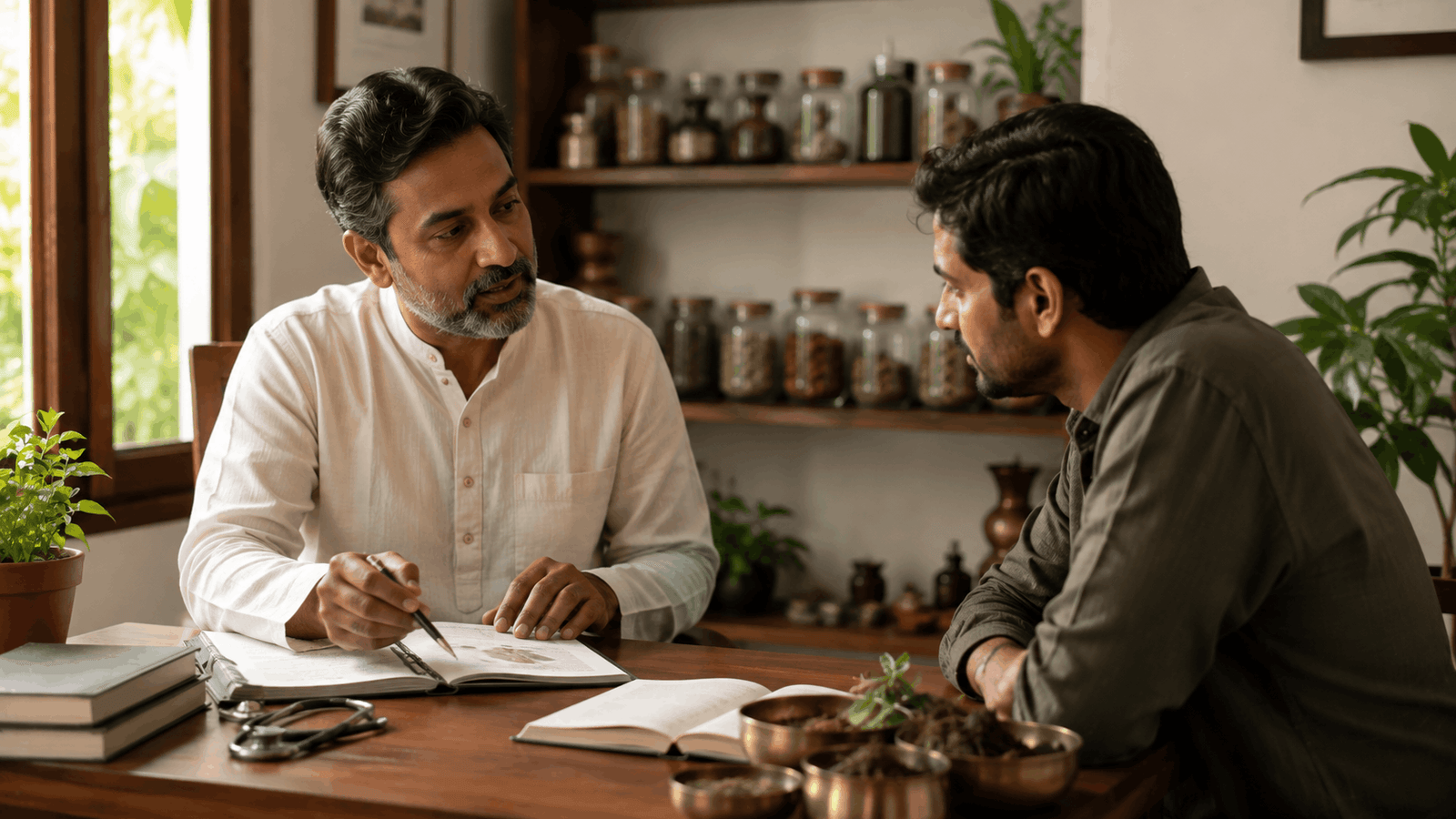
Panchakarma is more structured than an oil massage, herbal drink, fasting plan, or weekend detox package. Classical treatment involves assessment, preparation, a selected principal procedure, and post-treatment care.
In Ayurvedic practice, this approach is traditionally associated with purification and management of dosha imbalance involving Vata, Pitta, and Kapha. Terms such as ama, dosha, and Agni belong to the Ayurvedic framework and should not automatically be treated as direct equivalents of modern biomedical concepts.
What Does Panchakarma Mean?
Panchakarma means “five actions” or “five therapeutic procedures” in Ayurveda. The term refers to classical purification procedures described in Ayurvedic literature, with each having its own method, traditional purpose, preparation requirements, and patient-selection criteria.
Classical Ayurvedic traditions differ slightly in how the five procedures are classified. For example, the Charaka tradition discusses different forms of Basti separately, while other classifications include Raktamokshana among the five.
For beginners, the important distinction is simple: It refers to a structured Ayurvedic purification approach, not a single massage or generic detox routine.
What Is Panchakarma Treatment in Ayurveda?
This Ayurvedic treatment is a structured therapeutic process that combines individual assessment, preparation, a selected principal procedure, and post-treatment care.
Before treatment begins, the practitioner considers factors such as Prakriti (constitution), Vikriti (current imbalance), digestion, strength, age, medical history, and the procedure being considered.
A typical plan may include:
- Individual assessment
- Purvakarma, or preparation
- Pradhanakarma, or the principal treatment
- Paschatkarma, or post-treatment care
Preparation may include Snehana (oleation) and Swedana (therapeutic sweating), depending on the treatment plan.
Abhyanga, or Ayurvedic oil massage, may be part of preparation or another Ayurvedic therapy, but massage alone is not complete Panchakarma. Likewise, a short program based only on herbs, dietary restriction, massage, or steam should not automatically be described as classical Panchakarma.
What Are the Five Panchakarma Treatments?
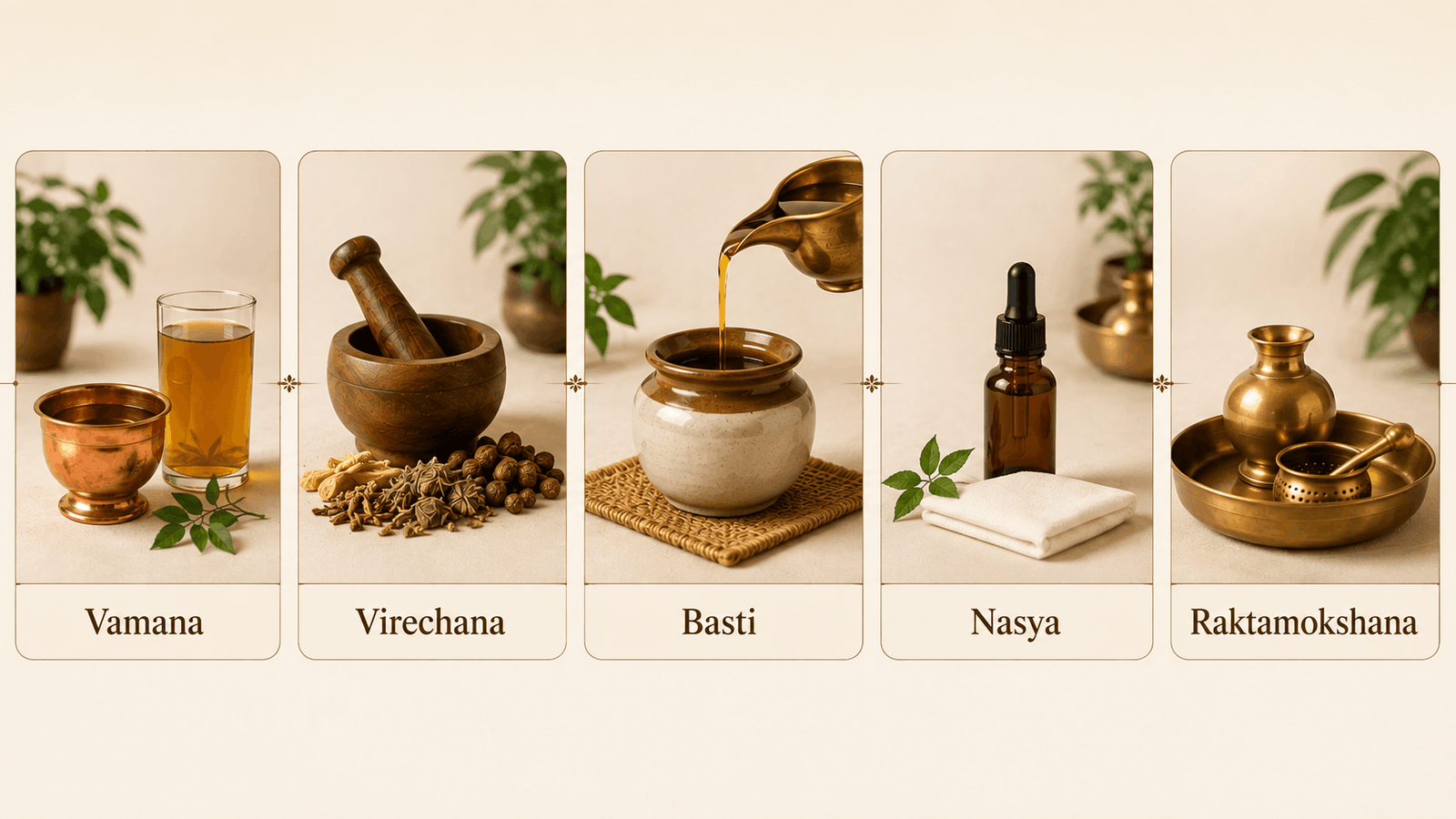
The five procedures commonly listed in Ayurvedic clinical practice are Vamana, Virechana, Basti, Nasya, and Raktamokshana. Classical traditions differ slightly in how these procedures are classified.
|
Procedure |
What It Involves |
Traditional Association |
|
Vamana |
Supervised therapeutic emesis |
Kapha |
|
Virechana |
Therapeutic purgation |
Pitta |
|
Basti |
Medicated oil or decoction administered through the rectal route |
Vata |
|
Nasya |
Selected medicine administered through the nasal route |
Head and neck |
|
Raktamokshana |
Traditional bloodletting, including leech therapy |
Rakta or blood tissue |
These associations reflect traditional Ayurvedic practice, not modern medical indications or proof of disease treatment.
- Vamana: Therapeutic Emesis
Vamana is a supervised therapeutic emesis traditionally associated with Kapha-related imbalance. The practitioner assesses the patient’s condition, strength, preparation, and suitability beforehand. Because induced vomiting can cause dehydration and other complications, it should never be attempted as a home detox.
- Virechana: Therapeutic Purgation
Virechana is controlled purgation using selected medicinal preparations and is traditionally associated with Pitta-related imbalance. The medicine, dose, timing, and follow-up are individualized, as purgation can affect hydration and electrolyte balance.
- Basti: Medicated Enema Therapy
Basti involves administering medicated oils, herbal preparations, or decoctions through the rectal route and is traditionally important in managing Vata-related conditions. Two commonly discussed forms are Anuvasana Basti, which is primarily oil-based, and Niruha or Asthapana Basti, which is primarily decoction-based. The formulation and schedule depend on individual assessment.
- Nasya: Ayurvedic Nasal Therapy
Nasya involves administering selected Ayurvedic medicines through the nasal route and is traditionally associated with the head, neck, nose, and sinus region. It may also be used as a standalone therapy and does not by itself constitute a complete Panchakarma program.
- Raktamokshana: Traditional Bloodletting
“Raktamokshana” refers to traditional bloodletting procedures, including medicinal leech therapy known as “Jalaukavacharana” in some Ayurvedic settings. Because it is invasive, appropriate training, hygiene, patient selection, and clinical safeguards are essential.
Patients do not necessarily receive all five procedures. The selected procedure or combination depends on individual assessment and the treatment objective.
What Are the Steps of Panchakarma?
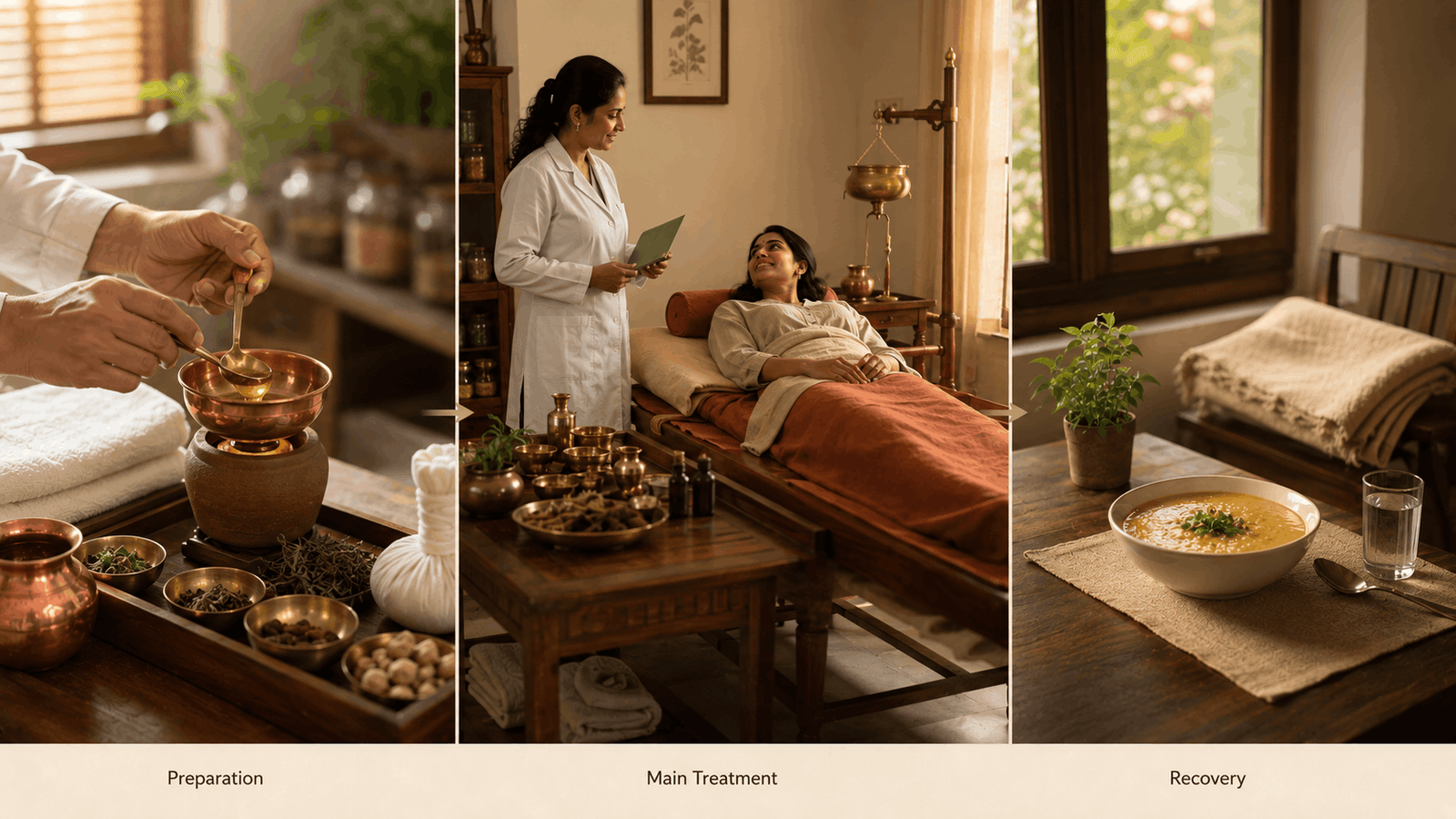
Panchakarma is generally organized into three stages: Purvakarma, Pradhanakarma, and Paschatkarma. They cover preparation, the principal procedure, and post-treatment recovery.
- Purvakarma: Preparation
Purvakarma prepares the patient for the principal procedure. Depending on the treatment plan, it may include Snehana (oleation) and Swedana (therapeutic sweating), along with dietary changes, rest, or other preparatory measures. The duration and approach vary based on the patient’s digestion, strength, constitution, season, and planned procedure.
- Pradhanakarma: The Main Procedure
Pradhanakarma is the principal therapeutic stage. Depending on the individual assessment, it may involve Vamana, Virechana, Basti, Nasya, or Raktamokshana. The procedure, formulation, dose, timing, and duration are individualized. Because these factors vary between patients, treatment instructions are individualized rather than taken from a fixed checklist.
- Paschatkarma: Recovery
Paschatkarma is the post-treatment phase, with dietary progression playing an important role after certain purification procedures. Ayurvedic practice may use Samsarjana Krama, a gradual transition from lighter foods toward a regular diet. Rice preparations, thin gruels, moong preparations, and kitchari may be introduced according to the practitioner’s instructions.
Rest, observation, and follow-up are also part of recovery, helping the patient transition back to their normal routine.
What Are the Benefits of Panchakarma?
Traditional Ayurvedic benefits include purification, support for dosha balance, digestive support, and preparation for rejuvenation therapies.
Traditional Ayurvedic Perspective
Within the Ayurvedic framework, Panchakarma is traditionally used to:
- Address ama as described in Ayurvedic theory
- Support balance among Vata, Pitta, and Kapha
- Support Agni, or digestive capacity
- Prepare a patient for selected Rasayana, or rejuvenation, approaches
- Support management of certain conditions through individualized Ayurvedic treatment
These statements describe traditional Ayurvedic practice and should not be presented as proof that it cures or prevents a specific medical condition.
What Does Modern Research Say?
Research on Panchakarma remains limited for many specific health outcomes, and studies vary in their treatment protocols, sample sizes, and quality.
A 2025 systematic review and meta-analysis examined Ayurvedic interventions for essential hypertension, including Panchakarma-based approaches. Of the 44 studies reviewed, 10 randomized controlled trials involving 524 participants were included in the meta-analysis. The pooled results did not show statistically significant blood pressure reductions compared with placebo or standard treatment, and the studies showed substantial variation.
The findings do not establish that the approach is ineffective for every purpose. Health claims should be matched to the specific procedure, condition, and quality of available evidence.
Terms such as ama, dosha, and Agni should also be understood within the Ayurvedic framework rather than automatically equated with modern biomedical concepts.
What Should You Eat During Panchakarma?
The diet depends on the procedure, treatment stage, digestive capacity, and individual treatment plan. There is no single diet chart that applies to every patient.
During preparation, meals are often kept light and easy to digest according to the practitioner’s instructions. Food intake may change again during the principal procedure.
Post-treatment dietary progression is often more structured. Samsarjana Krama refers to a gradual return toward a regular diet after certain purification procedures.
Depending on the protocol, foods may include the following:
- Rice gruel or other light rice preparations
- Moong dal preparations
- Kitchari
- Warm, freshly prepared meals
- Other foods selected according to digestive strength and treatment requirements
The exact sequence and timing should come from the treating practitioner. Copying another person’s diet can be inappropriate because the procedure, health status, and recovery requirements may differ.
Who Is Panchakarma Suitable For?
Suitability is determined through an individual assessment rather than a symptom checklist.
People may consult an Ayurvedic practitioner for concerns such as:
- Long-standing digestive complaints
- Recurring musculoskeletal concerns
- Seasonal Ayurvedic care
- Constitution-based preventive care
- Conditions traditionally addressed through Ayurvedic purification procedures
Certain situations require additional medical review before treatment. These include pregnancy, recent surgery, acute infection, significant chronic disease, and the use of important prescription medicines.
An assessment should consider medical history, current medicines, previous treatments, physical condition, digestion, strength, and the specific Panchakarma procedure being considered.
The final decision should be based on the individual’s health history, current medicines, physical condition, and the specific procedure being considered.
Is Panchakarma Safe?
Panchakarma safety depends on the procedure being considered, patient selection, practitioner training, medicines used, monitoring, and post-treatment care. Some procedures are intensive and require appropriate clinical supervision.
Vamana and Virechana involve induced vomiting or purgation. Basti and Raktamokshana also involve procedures that should be performed by appropriately trained professionals.
The sourcing and quality of Ayurvedic medicines also matter. Some Ayurvedic preparations have been found to contain potentially toxic heavy metals, including lead, mercury, or arsenic. Readers should ask how medicines are sourced, labeled, tested, and prescribed.
Before starting treatment, ask:
- Who will supervise the treatment?
- What are the practitioner’s qualifications?
- Which procedures are planned?
- Which medicines or formulations will be used?
- What monitoring and follow-up are provided?
Panchakarma should not replace urgent medical care or prescribed medicines. People who are pregnant, recovering from surgery, taking prescription medicines, or managing significant health conditions should discuss the treatment plan with their healthcare professionals before proceeding.
How Long Does Panchakarma Take and How Much Does It Cost?
Panchakarma has no single treatment duration or standard price. Both depend on the procedures selected, preparation and recovery requirements, medicines, consultations, treatment setting, and the center’s protocol.
Some programs may last one to two weeks, while more involved treatment plans can take longer when preparation and recovery are included. Ask for the expected schedule before booking, including preparation, principal procedures, recovery, and follow-up.
Cost may include:
- Initial and follow-up consultations
- Treatment days and procedures
- Ayurvedic medicines and formulations
- Therapeutic meals
- Accommodation
- Location and type of treatment center
An outpatient clinic and a residential Panchakarma center can have very different pricing. Request an itemized quote so you know exactly what is included.
Panchakarma vs. Ayurvedic Detox: Are They the Same?
Panchakarma and Ayurvedic detox are related terms, but they do not describe exactly the same thing. To learn more about how general detox practices differ from classical treatments, read our detailed comparison on Panchakarma and Ayurvedic detox.
|
Feature |
Panchakarma |
General Ayurvedic Detox |
|
Meaning |
Classical Ayurvedic purification procedures |
Broad cleansing or wellness term |
|
Assessment |
Individual assessment is central |
May be generic or individualized |
|
Procedures |
Specific therapeutic procedures |
May include diet, herbs, massage, or lifestyle changes |
|
Structure |
Preparation, principal treatment, recovery |
Varies by program |
|
Supervision |
Professional supervision is expected |
The level of supervision varies |
|
Intensity |
Can involve invasive procedures |
Often less intensive |
A short program involving massage, herbal drinks, or dietary restriction should not automatically be described as complete Panchakarma.
A short program involving massage, herbal drinks, or dietary restriction should not automatically be described as complete Panchakarma.
🌿 Explore Deeper Ayurvedic Care
How Ayurveda Purifies the Body From Within
Discover how classical detox therapies work alongside daily herbs like turmeric.
How Do You Choose a Panchakarma Center?
Before booking, a Panchakarma center should clearly explain the practitioner’s qualifications, treatment plan, medicines, safety measures, and total cost. For practitioner standards and professional practice, you can also refer to the WHO benchmarks for the practice of Ayurveda.
Before booking, ask:
- Who will supervise the treatment? Check the practitioner’s Ayurvedic qualifications and relevant clinical experience.
- Is an individual assessment done first? The treatment plan should be based on your health and Ayurvedic assessment, not a fixed package.
- Which procedures are included? Ask for the exact Panchakarma procedures rather than a general “detox” label.
- Which medicines will be used? Ask about the formulations, sourcing, labeling, and quality-control practices.
- What happens after treatment? Confirm whether dietary guidance, recovery instructions, and follow-up consultations are included.
- What is included in the total cost? Request an itemized estimate covering treatments, medicines, consultations, meals, accommodation, and follow-up services where applicable.
Clear answers make it easier to compare centers based on qualifications, treatment structure, safety practices, and what the quoted price actually includes.
Conclusion
Panchakarma is a structured Ayurvedic treatment approach involving selected classical purification procedures, preparation, and post-treatment care. The procedure, diet, duration, and aftercare depend on the individual’s assessment rather than a standard package.
If you’re considering Panchakarma, a consultation is the best place to start. A qualified Ayurvedic practitioner can assess your needs, explain which procedures may be appropriate, and outline what treatment would involve before you commit to a program.
 |
Ready to Explore Panchakarma?Have questions about Panchakarma or whether it may be suitable for you? Body • Mind • Spirit |
|
📍 Location: SA 6/168 Old RTO Office Chauraha, Sarnath, Ganapati Nagar, Ashapur Road, Pahariya, Sarnath-221007, Uttar Pradesh 📞 Contact: +91 96822 22121 ✉️ Website: vedicpanchakarma.com 🕒 Hours: Open 24 Hours |
Frequently Asked Questions About Panchakarma
Can Panchakarma be done at home?
Classical Panchakarma should not be self-administered at home. Procedures such as Vamana, Virechana, Basti, and Raktamokshana require appropriate assessment and professional supervision.
How often can you do Panchakarma?
There is no universal schedule. The timing of another Panchakarma program depends on the individual’s health, treatment goals, previous treatment, season, and procedures used. A qualified Ayurvedic practitioner should determine whether another course is appropriate.
Can you have Panchakarma if you take regular medicines?
It depends on the medicines and procedure involved. Your Ayurvedic practitioner should review your current medications and health history before treatment. Never stop or change prescribed medication without consulting the prescribing doctor.
What happens after Panchakarma treatment?
Recovery may include dietary guidance, rest, observation, lifestyle recommendations, and follow-up consultations. The exact aftercare depends on the procedure performed and the individual’s condition.
Can everyone undergo all five Panchakarma procedures?
No. Patients do not necessarily receive all five procedures. The practitioner selects the appropriate procedure or combination based on the individual’s condition, strength, constitution, treatment goals, and suitability.
Are there side effects after Panchakarma?
Possible effects vary by procedure and may include fatigue, nausea, changes in bowel movements, dehydration, or digestive discomfort. Proper preparation, monitoring, and aftercare can help manage procedure-related risks.
 Old RTO Chauraha, Sarnath, Varanasi 221007