
Panchakarma in Monsoon: Why Ayurveda Favors Varsha Ritu
Panchakarma in monsoon is traditionally linked with Varsha Ritu, the rainy season in Ayurveda. Classical Ayurvedic principles associate this period with changes in Agni, Vata, diet, and daily routine, which is one reason practitioners may consider certain Panchakarma therapies during the monsoon. Basti receives particular attention, but treatment timing still depends on individual assessment.
Why is Panchakarma in the monsoon considered favorable? Ayurveda traditionally describes Varsha Ritu as a period when Agni becomes weaker and Vata becomes more active. Seasonal Ayurvedic literature also gives Basti particular importance during this period. The seasonal framework provides guidance, but it does not mean every person should undergo Panchakarma during the rainy season.
✓
Panchakarma in Monsoon at a Glance
6 Key Insights
01
02
03
04
05
06
Is Panchakarma in Monsoon a Favorable Choice?

Panchakarma in monsoon is traditionally considered favorable for selected therapies because Varsha Ritu brings seasonal changes described in Ayurveda. The rainy season follows the hotter months, and Ayurvedic seasonal theory describes changes in digestive strength and dosha activity during this transition.
Ayurveda divides the year into six Ritus, each associated with particular environmental conditions and dosha patterns. Varsha Ritu is the rainy season and follows Grishma, or summer.
For Panchakarma in monsoon, this seasonal shift matters because Ayurveda traditionally connects Varsha Ritu with weaker Agni and increased Vata activity. Basti therefore receives particular attention in seasonal treatment planning.
The calendar alone, however, does not determine treatment. A practitioner may consider your constitution, current health, digestive status, treatment goals, previous therapies, and ability to complete preparation and recovery before recommending a procedure.
That distinction is worth keeping in mind. A season can provide a traditional treatment window without making the same therapy suitable for every person.
🌿 Explore Deeper Ayurvedic Care
New to Ayurvedic purification therapies?
Understand how classical therapies detoxify the body and restore balance in our complete overview:
What Is Varsha Ritucharya?
Varsha Ritucharya is the Ayurvedic seasonal regimen followed during the rainy season. Official protocols in the AYUSH Health Advisory recommend consuming warm, freshly prepared meals, herb-spiced buttermilk, and boiled safe water to maintain digestive strength during the monsoon. It covers essential guidance for food, daily routine, physical activity, rest, and therapeutic care.
Understanding Varsha Ritucharya helps explain why Panchakarma in monsoon has a specific place in seasonal Ayurveda. Treatment is considered alongside everyday habits rather than as a completely separate event.
What Does Varsha Ritu Mean in Ayurveda?
Varsha Ritu is the Ayurvedic term for the monsoon or rainy season. It is one of the six Ritus described in classical Ayurvedic seasonal theory.
The season follows Grishma, or summer. Ayurveda traditionally describes this transition as a period when the body may have reduced strength after the preceding hot months, while the arrival of rain introduces cooler and more humid environmental conditions.
Regional calendars can differ when defining the exact months of Varsha Ritu. For readers, the practical point is that Varsha refers to the rainy-season phase within the Ayurvedic seasonal cycle.
This seasonal transition forms part of the traditional reasoning behind Panchakarma in monsoon.
Why Does Seasonal Change Matter in Ayurveda?
Ritucharya is based on the Ayurvedic view that the body responds to changes in its environment. Temperature, humidity, food patterns, physical activity, and daily routine can all change throughout the year.
Classical Ayurvedic seasonal principles and their physiological effects during Varsha Ritu are well documented in clinical research, including studies published on the concept of Ritucharya in Ayurveda.
During Varsha Ritu, Ayurveda, therefore, recommends adjusting diet and lifestyle instead of following exactly the same routine in every season. The season provides one factor for treatment planning, while individual assessment provides another.
Why Is Ritucharya Important?
Ritucharya gives people a practical framework for adapting everyday habits to seasonal conditions. It is broader than Panchakarma and does not require someone to undergo a cleansing therapy.
For example, seasonal guidance may address meal timing, food preparation, water, physical activity, sleep, and exposure to damp weather. These habits form the background against which seasonal Ayurvedic treatment is considered.
Why Is Panchakarma Done During Monsoon?
The traditional reasoning behind Panchakarma in monsoon centers on three connected ideas: Agni, Vata, and the seasonal environment.
Ayurveda describes Agni as weaker during Varsha Ritu and Vata as more aggravated. These concepts belong to Ayurvedic physiology and should not be presented as modern biomedical measurements.
For practitioners following this framework, seasonal changes can influence when and how certain therapies are planned. Basti receives particular attention because of its traditional relationship with Vata.
Agni and Digestion During Varsha Ritu
Agni, often translated as digestive fire, is an important concept in Ayurveda. During Varsha Ritu, classical Ayurvedic descriptions associate the season with reduced digestive strength.
For someone considering Panchakarma in monsoon, this matters because preparation and diet form an important part of a Panchakarma program. A practitioner may therefore pay close attention to digestive status before recommending treatment.
Ama is another Ayurvedic concept associated with incomplete digestion. It should be understood within Ayurvedic physiology rather than presented as a modern laboratory diagnosis.
From a practical standpoint, this seasonal emphasis is one reason diet and meal habits appear repeatedly in discussions about Varsha Ritucharya.
🌿 Support Your Seasonal Digestion
Looking to kindle your digestive fire (Agni) during monsoon?
Learn how ginger boosts digestion, balances Agni, and strengthens immunity in our detailed guide:
Vata and Seasonal Changes
Vata receives particular attention during Varsha Ritu. Ayurvedic seasonal theory associates the rainy season with conditions that can aggravate Vata.
This connection is central to Panchakarma in monsoon, particularly when discussing Basti.
The traditional Ayurvedic view places the colon among the principal sites associated with Vata. Basti is consequently given a prominent place in Vata-focused treatment planning.
For a patient, the important point is not to diagnose a Vata imbalance independently. The dosha assessment is part of the practitioner’s clinical evaluation.
Which Panchakarma therapies are used during monsoon?
Panchakarma in monsoon does not mean that every Panchakarma procedure is performed during the rainy season.
Classical Panchakarma includes five major procedures:
- Vamana
- Virechana
- Basti
- Nasya
- Raktamokshana
The procedure selected depends on the individual’s condition, therapeutic objective, constitution, and practitioner assessment.
Basti
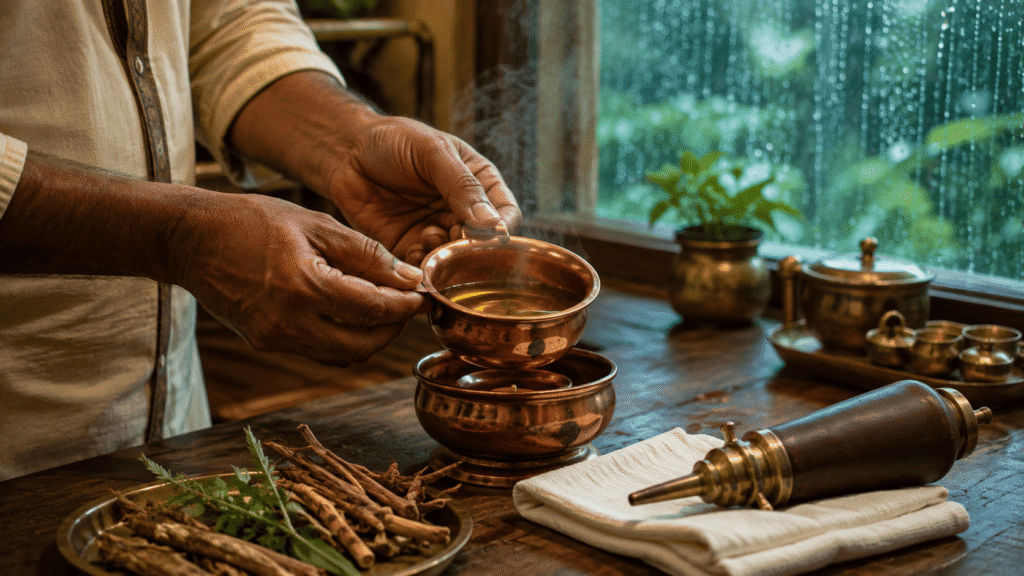
Basti is the Panchakarma procedure most strongly associated with Vata. Because Varsha Ritu is traditionally linked with Vata aggravation, Basti receives particular attention when planning Panchakarma in monsoon.
The type of Basti, formulation, frequency, and duration should not be treated as a fixed, seasonal prescription. These details require individual assessment.
Basti is also not equivalent to a general wellness treatment. It is a classical therapeutic procedure and should be performed according to an appropriate treatment plan.
Virechana
Virechana refers to therapeutic purgation and is traditionally associated with Pitta-related imbalance.
It can be considered during appropriate seasonal periods and in selected individuals. Panchakarma in monsoon, therefore, should not be reduced to a single procedure or treated as a universal Basti recommendation.
The season may influence treatment timing, but the intended therapeutic outcome still matters.
Vamana and Other Procedures
Vamana, Nasya, and Raktamokshana are also part of classical Panchakarma. Their use depends on the person’s condition and the treatment objective.
Vamana is traditionally associated with Kapha, while Nasya involves administration through the nasal route. Raktamokshana is a separate classical procedure with its own indications and considerations.
These distinctions help prevent a common misunderstanding: Panchakarma is a group of procedures, not one standardized treatment.
Why Does Basti Get Special Attention During Monsoon?
Basti receives particular attention in Panchakarma in monsoon because Ayurveda connects Varsha Ritu with Vata aggravation and identifies Basti as an important therapy for Vata.
This relationship is one of the clearest links between seasonal Ayurveda and Panchakarma.
The treatment itself is more specific than simply choosing a “monsoon Basti.” Different Basti approaches may be selected according to the person’s condition and treatment goal.
A practitioner may therefore assess factors such as constitution, digestion, current symptoms, strength, age, previous treatment, and the person’s ability to follow preparation and recovery instructions.
The rainy season can provide a traditional treatment window. It does not replace the clinical assessment needed to decide what happens inside that window.
What Does Varsha Ritucharya Include?
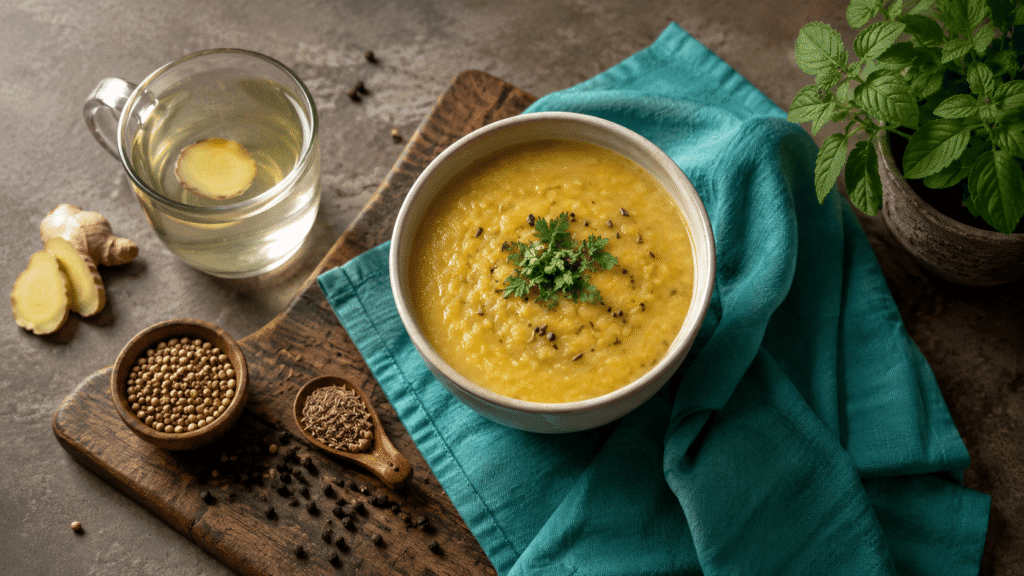
Varsha Ritucharya covers everyday habits as well as therapeutic care. These practices provide the broader seasonal context for Panchakarma in monsoon.
| Area | Traditional Varsha Ritucharya Approach |
|---|---|
| Food | Warm, freshly prepared, easily digestible meals |
| Water | Safe, boiled or appropriately filtered water |
| Daily routine | Regular sleep and meal timings |
| Activity | Moderate physical activity without overexertion |
| Rest | Adequate rest during the season |
| Therapeutic care | Seasonal therapies under practitioner guidance |
Food During Varsha Ritu
Ayurvedic seasonal guidance generally emphasizes food that is suitable for digestion during the rainy season. Warm, freshly prepared meals are commonly discussed, along with moderation of foods considered heavy or difficult to digest.
The exact diet should still be adapted to the person. Someone undergoing Panchakarma may receive a more specific dietary plan than someone simply following Varsha Ritucharya.
Water and Hydration
Safe drinking water becomes especially important during the rainy season. Traditional Ayurvedic guidance may recommend boiled or appropriately treated water.
Modern food and water safety practices should be followed alongside any traditional routine. Seasonal Ayurveda should not be used as a substitute for basic hygiene and safe drinking-water practices.
Daily Routine and Activity
Varsha Ritucharya also addresses daily habits. Regular sleep and meal timings, moderate physical activity, and adequate rest are commonly included in seasonal recommendations.
For someone undergoing Panchakarma in monsoon, the treatment schedule may make routine even more important because preparation, therapy, and recovery can require changes to normal daily activities.
Following seasonal routines does not mean someone needs Panchakarma. Ritucharya is a broader seasonal framework, while Panchakarma in monsoon refers specifically to therapeutic Panchakarma planning during Varsha Ritu.
🌿 Enhance Your Healing Journey
Combine therapies with powerful natural formulations
Discover the healing benefits of Haridra (turmeric) for inflammation and body balance in our dedicated article:
Should You Consider Panchakarma in Monsoon?
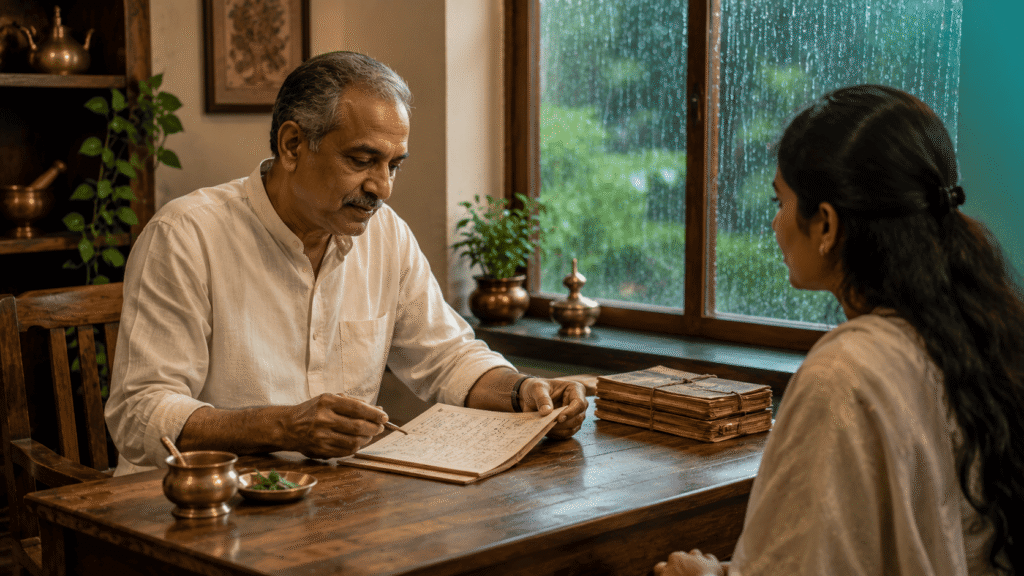
Some people consider Panchakarma in monsoon as part of seasonal Ayurvedic care. The decision should start with an individual consultation rather than a fixed treatment package.
A practitioner may consider the following:
- Prakriti, or individual constitution
- Vikriti, or current imbalance
- digestive status
- current health
- treatment goals
- previous therapies
- age and physical strength
- ability to follow preparation and recovery instructions
The final treatment plan may look very different for two people visiting the same clinic in the same month.
Monsoon timing can be relevant, but it is only one part of the decision.
When Should You Get Individual Advice First?
Individual assessment becomes particularly important when someone has an existing health condition, is taking medication, has recently undergone surgery, or is experiencing an acute illness.
Pregnancy is another situation where professional medical and Ayurvedic guidance should be obtained before considering a therapeutic program.
Panchakarma should not be selected from a seasonal article alone. An article can explain the traditional reasoning behind Panchakarma in monsoon, but it cannot determine whether treatment is appropriate for a specific person.
Panchakarma in Monsoon vs Other Seasons
Ayurveda does not consider monsoon the only season for Panchakarma. Different seasons have different traditional therapeutic priorities.
| Season | Traditional Ayurvedic Focus | Panchakarma Context |
|---|---|---|
| Varsha Ritu | Vata aggravation and weaker Agni | Basti often emphasized |
| Sharad Ritu | Pitta-related seasonal changes | Virechana may be considered |
| Vasanta Ritu | Kapha accumulation | Vamana may be considered |
| Grishma Ritu | Heat and seasonal depletion | Lighter seasonal care |
| Hemanta Ritu | Stronger digestion and physical strength | Nourishing seasonal practices |
| Shishira Ritu | Cold and Kapha-related qualities | Seasonal adjustment |
Why Is Monsoon Different?
The traditional rationale for Panchakarma in monsoon is closely connected with Varsha Ritu’s effect on Agni and Vata within Ayurvedic theory.
Other seasons have their own qualities and treatment associations. Sharad Ritu, for example, is traditionally discussed in relation to Pitta, while Vasanta is associated with Kapha accumulation.
The comparison is useful because it shows why saying “monsoon is the best season for every Panchakarma therapy” would be too broad.
Seasonal Ayurveda is more specific than that.
Is There One Best Season for Everyone?
No single season is universally superior for every person or every procedure.
A practitioner considers the season together with the person’s constitution, current condition, treatment objective, strength, and other clinical factors.
That approach also makes sense when discussing Panchakarma in monsoon. The rainy season may be especially relevant to Basti, but it does not automatically determine the right treatment for an individual.
What Is Karkidaka Chikitsa?
Karkidaka Chikitsa is a Kerala Ayurvedic seasonal tradition associated with the Malayalam month of Karkidakam, which occurs during the monsoon period.
The approach can include dietary practices, lifestyle changes, oil therapies, and Panchakarma-related treatments. Karkidaka Kanji is another well-known regional seasonal practice.
How Is Karkidaka Chikitsa Related to Panchakarma?
Karkidaka Chikitsa and Panchakarma in monsoon are related but not interchangeable.
Karkidaka Chikitsa is a broader regional seasonal approach. It can include everyday diet and lifestyle practices alongside selected Ayurvedic therapies.
Panchakarma refers to a defined group of classical therapeutic procedures.
This distinction is particularly useful for people researching Kerala Ayurveda because a seasonal Karkidaka program may include several forms of care rather than a Panchakarma procedure alone.
What Should You Know Before Starting Panchakarma in Monsoon?
Panchakarma in monsoon should be approached as a planned therapeutic program rather than a quick seasonal detox.
Before starting, ask the clinic or practitioner:
- Which Panchakarma procedure is being recommended?
- Why is that procedure appropriate for your current condition?
- How long will preparation take?
- What does the treatment schedule involve?
- What dietary restrictions or changes are expected?
- What should you do after the main treatment?
- Are there any health conditions or medications that need to be considered?
- Who will supervise the treatment?
These questions can make the consultation much more useful. They also help you understand whether the recommendation is genuinely individualized or simply based on the fact that it is monsoon season.
How Long Does Panchakarma in Monsoon Take?
There is no universal duration for Panchakarma in monsoon.
The total program can include preparation, the main procedures, and post-treatment dietary and lifestyle care. The length therefore depends on the selected therapy and the individual treatment plan.
A short consultation may be enough to decide whether a person is suitable for treatment, but the actual Panchakarma schedule can require considerably more time.
Patients should ask for the complete schedule before booking travel or making work arrangements.
Conclusion
Panchakarma in monsoon has a specific place in Ayurvedic seasonal practice because Varsha Ritu is traditionally associated with changes in Agni, Vata, digestion, and daily routine. Basti receives particular attention during this period because of its traditional relationship with Vata.
However, the arrival of monsoon alone does not determine whether Panchakarma is appropriate. The choice of procedure, timing, preparation, and duration should be based on an individual’s constitution, current health, treatment goals, and assessment by a qualified Ayurvedic practitioner.
For anyone considering Panchakarma in monsoon, the better approach is to view Varsha Ritu as a potentially suitable seasonal window rather than a universal prescription. A professional consultation can help determine whether Basti or another Panchakarma therapy is appropriate and how the treatment should be planned.
What Happens After Panchakarma?
Post-treatment care is an important part of Panchakarma. Ayurveda traditionally recommends a gradual return to regular food and activity rather than immediately resuming a heavy diet or demanding routine.
The exact instructions vary according to the treatment received.
A person may be advised to follow a specific diet, maintain regular rest, and avoid strenuous activity for a period determined by the practitioner.
The recovery phase should therefore be included when planning Panchakarma in monsoon rather than treating the main procedure as the entire program.
 |
Book a Monsoon Basti ProgramIf you’re considering Panchakarma in monsoon, consult a qualified Ayurvedic practitioner to determine whether Basti or another therapy is right for you. Reviewed by Dr. Komal Maurya, BAMS |
📍 Location: SA 6/168 Old RTO Office Chauraha, Sarnath, Ganapati Nagar, Ashapur Road, Pahariya, Sarnath-221007, Uttar Pradesh
📞 Contact: +91 96822 22121
✉️ Website: vedicpanchakarma.com
🕒 Hours: Open 24 Hours
Frequently Asked Questions
What should you eat before Panchakarma during monsoon?
Food before Panchakarma depends on the procedure and the individual’s digestive capacity. A practitioner may recommend a lighter, easier-to-digest diet as part of preparation rather than applying one fixed diet to everyone.
How long does a monsoon Panchakarma program take?
The duration varies according to the treatment plan. Preparation, the main procedures, and post-treatment care can all affect the length of a program.
What should you avoid after Panchakarma?
Post-treatment restrictions depend on the procedure and the practitioner’s instructions. Ayurveda traditionally recommends a gradual return to normal food and activity rather than immediately returning to a heavy diet or demanding routine.
Can you work while undergoing Panchakarma?
Work may or may not fit into the treatment schedule. Some programs require more rest and reduced activity, so patients should discuss their normal work routine with the practitioner before starting.
What should you bring for a Panchakarma treatment program?
The exact requirements vary by clinic. Comfortable clothing, personal essentials, relevant health records, current medication information, and any items requested by the treatment center are practical things to prepare.
Can beginners undergo Panchakarma?
Being new to Panchakarma does not automatically prevent treatment. A first-time patient should still receive an individual consultation before beginning any procedure.
What is the difference between Panchakarma and Ayurvedic massage?
Panchakarma is a structured therapeutic approach involving specific procedures and protocols. Ayurvedic massage, such as Abhyanga, is a separate therapy that may sometimes be used independently or as part of preparation for certain treatments.
Does Panchakarma require preparation?
Many Panchakarma programs include preparation before the main procedures. The exact steps depend on the selected therapy, the person’s condition, and the practitioner’s treatment plan.

 Old RTO Chauraha, Sarnath, Varanasi 221007