
Ginger (Adrak): Ayurvedic Benefits, Uses, Dosage and Precautions
Ginger benefits include support for digestion and nausea, while research into inflammation, metabolism, and other potential effects is still developing. In Ayurveda, this familiar kitchen spice has a much longer story. Known as Adrak when fresh and Shunthi when dried, ginger has been used for centuries in food, teas, and traditional herbal formulations. Understanding the full range of ginger benefits means looking at both sides of that story, the traditional and the clinical.
I keep a jar of dried ginger powder next to my stove because it earns its place there. A little goes into tea, soups, and dals, especially when the weather turns cold. But ginger is more than a kitchen ingredient. Ayurveda considers it a warming herb that supports digestion, while modern research has examined its potential role in nausea, inflammation, menstrual discomfort, and metabolic health. The ginger benefits people talk about most often, digestion and nausea relief, are also the ones with the strongest evidence behind them.
So where does traditional knowledge end and modern evidence begin? The ginger benefits below are grouped so you can see which claims come from centuries of Ayurvedic use and which come from clinical research. Let’s take a closer look.
✓
Ginger Benefits at a Glance
6 Key Insights
01
02
03
04
05
06
What Is Ginger (Adrak) in Ayurveda?
Ginger comes from the rhizome of Zingiber officinale. In Ayurvedic terminology, the fresh form is called Adrak, while dried ginger is known as “Shunthi.”
Ayurveda places considerable importance on digestion and describes it through the concept of Agni, or digestive fire. Ginger is traditionally considered a warming herb that helps support Agni and is often used when digestion feels sluggish or heavy.
It is also traditionally associated with balancing Kapha and Vata. In Ayurvedic terms, these relate to qualities such as heaviness, coldness, dryness, and movement. These concepts belong to the Ayurvedic system and should not be treated as clinical diagnoses.
Ginger also appears in traditional formulations such as Trikatu, where it is combined with black pepper and long pepper. Its role, and the specific ginger benefits it offers, can vary depending on how it is prepared and what other herbs are used with it.
What Are the Ginger Benefits You Should Know?

The strongest modern evidence for ginger centres on nausea and certain digestive symptoms. Researchers have also studied ginger for inflammation, menstrual pain, blood sugar, cardiovascular health, and weight management, although the evidence is more mixed for some of these uses.
Ayurveda has a broader traditional history with the herb. Here are the main ginger benefits worth knowing, organised by what they help with.
How Does Ginger Support Digestion?
One of the most familiar Ayurvedic uses of ginger is digestive support. Traditionally, a small piece of fresh ginger may be taken before a meal to stimulate Agni and prepare the digestive system. Digestion is one of the ginger benefits that Ayurvedic sources mention most consistently.
I’ve done this myself before heavy family dinners. A thin slice of fresh ginger with a little rock salt is simple, and I find it easier on my stomach than reaching for something much heavier afterward. Of course, personal experience isn’t evidence, but it explains why this particular Ayurvedic practice has stayed in my kitchen.
Modern research supports a more limited claim. Studies and reviews have examined ginger for mild digestive complaints such as bloating and gas, as well as its effects on gastrointestinal function.
That doesn’t mean ginger cures indigestion or other digestive diseases. It means there is some scientific support for the more modest digestive ginger benefits that have traditionally been associated with the herb.
🌿 Explore Ayurvedic Detox
How Ayurveda Purifies the Body
Learn how classical purification therapies work alongside digestive herbs like ginger in our guide:
Can Ginger Help With Nausea?
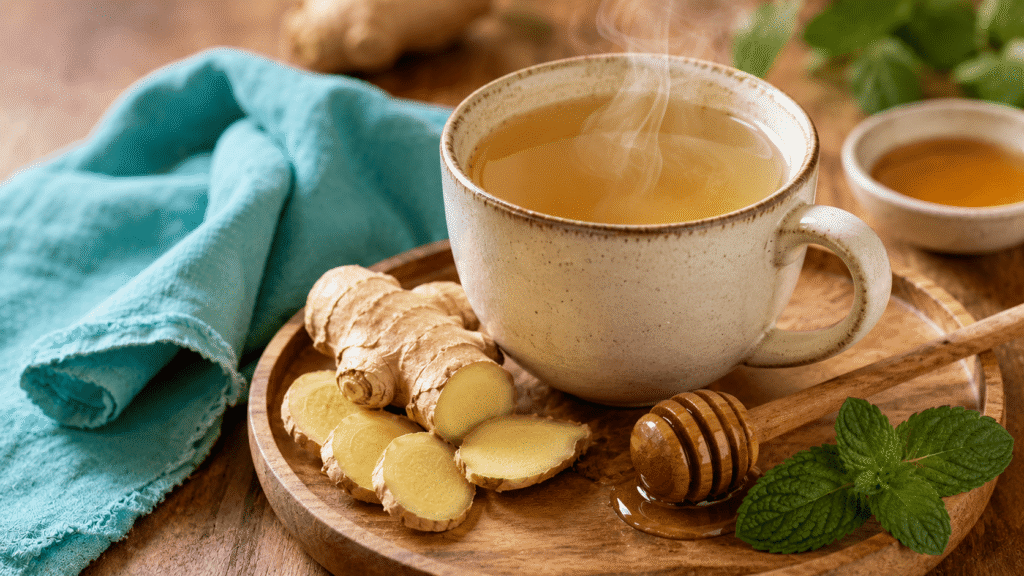
This is probably the best-supported of the ginger benefits.
Research has examined ginger for several types of nausea, including pregnancy-related nausea and motion sickness. Clinical studies have generally used relatively small amounts, often around 1 to 1.5 grams per day depending on the situation and preparation.
Ayurveda has long used ginger for stomach upset and nausea, so this is one area where traditional practice and modern research overlap particularly well. Nausea relief is the clearest example of ginger benefits that both systems agree on.
That said, ginger isn’t appropriate for every cause of nausea. Persistent vomiting, severe abdominal pain, dehydration, or unexplained nausea deserves medical attention rather than continued self-treatment with herbs.
Does Ginger Reduce Inflammation and Joint Pain?
Ginger contains naturally occurring compounds such as gingerols and shogaols, which researchers have studied for their effects on inflammatory pathways. Anti-inflammatory action is one of the more studied ginger benefits, though it’s also one of the less settled ones.
The research is promising, but it needs to be interpreted carefully. Some evidence comes from laboratory and animal studies, while human research remains more limited.
Ayurveda has traditionally used dried ginger in preparations associated with joint discomfort and other Kapha-related conditions. Its warming qualities are part of the traditional reasoning behind these uses.
So ginger may have a useful role as part of a broader approach, but it shouldn’t be presented as a replacement for medical treatment for arthritis or other inflammatory conditions.
Is Ginger Good for Immunity and Respiratory Health?
Ginger tea with honey and black pepper is a familiar home remedy in many Indian households. Ayurveda traditionally values ginger for its warming qualities and uses it in preparations intended to support respiratory comfort. This is one of the ginger benefits people reach for instinctively the moment a cold starts.
Modern evidence doesn’t justify calling ginger a direct antiviral treatment or claiming that it prevents infections.
A more accurate way to look at it is simple: ginger may be a comforting addition to a warm drink when you’re dealing with minor cold symptoms, but it shouldn’t replace appropriate care for an infection.
✨ Complementary Ayurvedic Herbs
Turmeric Benefits, Uses & Precautions
Discover how ginger’s golden counterpart supports immunity and inflammation control in our guide:
Can Ginger Ease Menstrual Cramps?
Ginger may also help with menstrual discomfort. Several clinical studies have examined its effect on dysmenorrhea, or painful periods, with research suggesting that it can reduce pain for some women. This is one of the lesser-known ginger benefits, even though the research behind it is fairly solid.
The Ayurvedic explanation is different. Traditional Ayurvedic approaches may associate menstrual discomfort with Vata, and ginger’s warming qualities make it a common choice in some formulations.
The two systems aren’t explaining the effect in the same way. Still, both have led researchers and practitioners to explore ginger as a potential option for menstrual discomfort.
Does Ginger Support Metabolism and Weight?
Ginger is sometimes promoted as a natural fat burner, but that description goes too far. Weight-related ginger benefits tend to get exaggerated more than any other claim on this list.
Some research has looked at ginger’s possible effects on satiety, metabolism, and body composition. The findings are interesting, but they don’t show that adding ginger to your diet will automatically cause meaningful weight loss.
Ayurveda approaches the issue differently, linking sluggish digestion and metabolism with weak Agni. Ginger may be included as part of a broader dietary and lifestyle approach rather than treated as a standalone solution.
If weight management is your goal, ginger can be part of a balanced diet. It isn’t a substitute for nutrition, physical activity, sleep, or other factors that affect body weight.
Is Ginger Good for Heart Health?
Researchers have also studied ginger in relation to blood sugar, cholesterol, and other cardiovascular risk factors. Heart-related ginger benefits are still emerging rather than firmly established.
Some studies have reported improvements in measures such as fasting blood glucose or lipid levels, but results vary and the evidence isn’t strong enough to recommend ginger as a treatment for diabetes or heart disease.
This is another case where it’s useful to separate promising research from established treatment. If you’re taking medication for blood sugar, blood pressure, cholesterol, or heart disease, ginger shouldn’t replace your prescribed care.
How Is Ginger Used in Ayurveda?
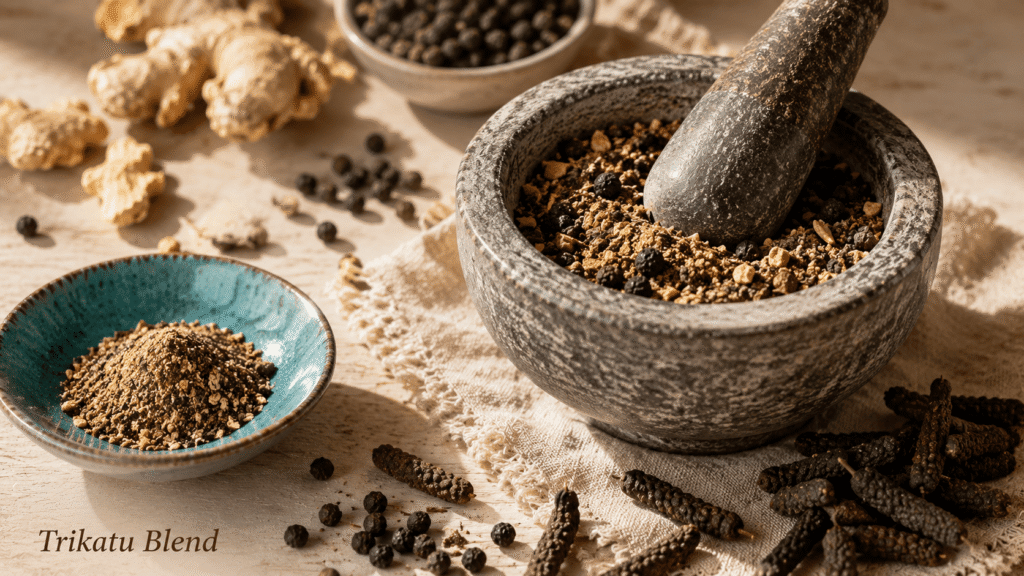
You don’t need an elaborate preparation to use ginger. Some of the simplest traditional ginger uses involve the same ingredient you probably already have in your kitchen.
Fresh vs. Dried Ginger in Ayurveda
| Fresh Ginger (Adrak) | Dried Ginger (Shunthi) | |
|---|---|---|
| Traditional form | Adrak | Shunthi |
| Ayurvedic quality | Warming and generally considered gentler | More warming and concentrated |
| Common uses | Tea, cooking, digestive preparations | Powders, teas, and Ayurvedic formulations |
| Typical preparation | Sliced, grated, or simmered | Powdered or used as part of a formulation |
| Best suited to | Everyday culinary use and milder preparations | More concentrated traditional preparations |
Fresh ginger can be sliced into tea, grated into dals and soups, or used in cooking. Dried ginger powder can be added to warm water or incorporated into traditional herbal preparations.
Ginger tea is one of the easiest options. Simmer a few slices of fresh ginger in water for several minutes, then add honey after the drink has cooled slightly if you prefer it sweeter.
How Much Ginger Can You Take Daily?
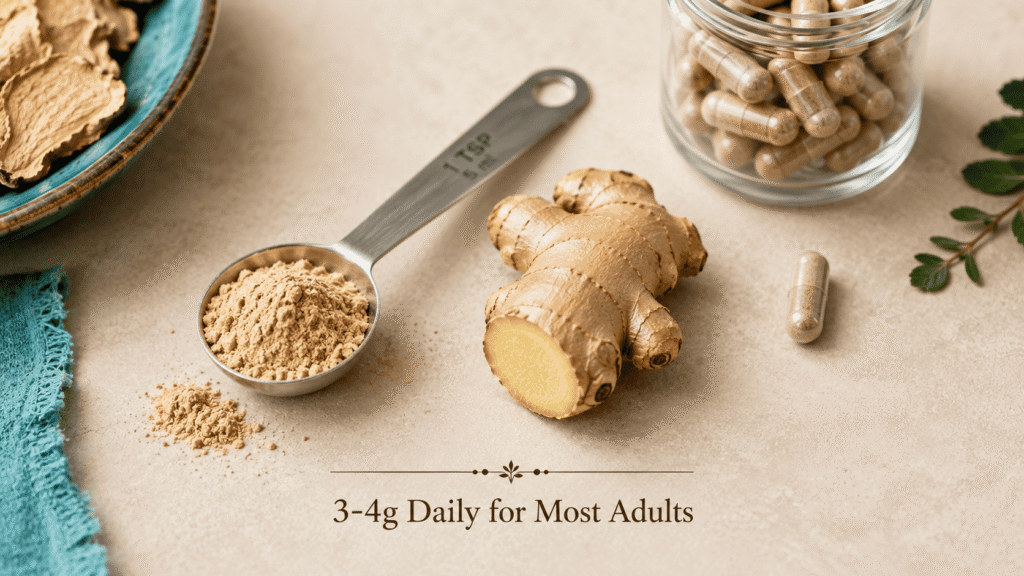
Ginger dosage depends on the form, purpose, and individual health factors. Clinical research on nausea has commonly used around 1 to 1.5 grams per day. Some health sources cite up to 3 to 4 grams of ginger daily for most healthy adults. Getting the dosage right is what turns ginger benefits into something safe and repeatable rather than a source of stomach upset.
Those numbers aren’t a personal prescription. Total intake can come from fresh ginger, dried powder, tea, and supplements, so it’s easy to underestimate how much you’re taking when several sources are combined. Pregnancy deserves additional caution. Anyone considering concentrated ginger supplements during pregnancy should discuss the appropriate amount with their doctor or qualified practitioner.
The same applies if you’re taking prescription medication or considering a high-dose supplement.
What Are Ginger Side Effects?
Ginger is generally well tolerated in normal food amounts, but ginger side effects become more likely when intake increases or when concentrated supplements are used. Weighing ginger benefits against these side effects is really the whole dosage conversation in one sentence.
The most common problems include:
- Heartburn or acid reflux
- Stomach discomfort
- Diarrhoea at higher doses
- Possible effects on blood clotting
- Possible effects on blood sugar
People with gallbladder problems should also ask a healthcare professional before taking concentrated ginger products.
There’s an important difference between adding some ginger to your food and taking a concentrated extract every day. The latter can deliver much larger amounts, which is why supplement use deserves more caution.
Who Should Be Careful With Ginger Supplements?
If you take blood-thinning medication, diabetes medication, or other prescription drugs, talk with your healthcare professional before starting a concentrated ginger supplement.
The same applies during pregnancy and if you have gallbladder disease or another ongoing health condition.
This doesn’t mean you automatically need to avoid ginger in everyday food. Culinary use and concentrated supplementation are very different levels of exposure, and most everyday ginger benefits come from the culinary side, not the supplement aisle.
When in doubt, discuss the specific product and amount with your doctor or qualified Ayurvedic practitioner rather than guessing.
Conclusion
Ginger has remained popular for good reason. Ayurveda has used it for centuries, and modern research has given us some useful evidence to explain why certain traditional applications may work. The ginger benefits with the strongest evidence right now are nausea relief and mild digestive support. Research into inflammation, menstrual discomfort, metabolism, blood sugar, and cardiovascular health is promising in places, but it isn’t equally conclusive across all uses.
The practical takeaway is straightforward: ginger can be a useful everyday herb, but more isn’t always better. Culinary use is generally simple for healthy adults, while concentrated supplements call for more attention to dosage, medications, pregnancy, and existing health conditions.
Used thoughtfully, ginger benefits can fit comfortably into both an Ayurvedic-inspired routine and a modern kitchen.
Footer code:
 |
Ready to take the next step?At Vedic Panchakarma, we believe true healing begins by restoring balance within the body, mind, and spirit, naturally and holistically. Body • Mind • Spirit |
|
📍 Location: SA 6/168 Old RTO Office, Chauraha, Sarnath, Ganapati Nagar, Ashapur Road, Pahariya, Sarnath-221007, Uttar Pradesh 📞 Contact: +91 96822 22121 ✉️ Website: vedicpanchakarma.com 🕒 Hours: Open 24 Hours |
Frequently Asked Questions
Can You Drink Ginger Tea Before Bed?
Yes, most people can. Ginger doesn’t contain caffeine, although strong ginger tea may cause heartburn in people who are sensitive to reflux. If you’re prone to nighttime acidity, a milder tea earlier in the evening may be more comfortable.
Can Ginger Tea Cause Dehydration?
Normal amounts of ginger tea aren’t expected to cause meaningful dehydration. Since the drink itself provides fluid, a cup of ginger tea can contribute to your overall fluid intake.
Does Cooking Change Ginger’s Active Compounds?
Yes. Heat changes the chemical profile of ginger. Some gingerol can convert into other compounds, including shogaol, which changes the flavour and chemical activity of the cooked ginger.
How Should Fresh Ginger Be Stored?
Keep fresh ginger dry and refrigerated to extend its shelf life. If it becomes soft, mouldy, or develops an unusual smell, it’s better to discard it.
Can Ginger Be Frozen?
Yes. Whole or grated ginger can be frozen for later use. Frozen ginger can also be grated directly into cooking without waiting for it to thaw completely.
Can Children Have Ginger Tea?
Small, diluted amounts used as food are different from concentrated ginger supplements. For young children, especially those under two, check with a paediatrician before using ginger medicinally.
Should You Tell Your Dentist or Surgeon About Ginger Supplements?
Yes. If you regularly take concentrated ginger supplements, tell your dentist or surgeon before a procedure. Because ginger may affect bleeding, your healthcare professional can advise whether you need to stop the supplement beforehand.


 Old RTO Chauraha, Sarnath, Varanasi 221007