
Ayurvedic Treatment for Gas and Bloating: 7 Effective Tips
Medical Disclaimer
This article on ayurvedic treatment for gas and bloating is for educational purposes only and does not constitute medical advice. Consult a qualified gastroenterologist or Ayurvedic practitioner before starting any herbal remedies or therapeutic plans, particularly if you experience persistent symptoms, severe pain, or have underlying health conditions.
Consult a practitioner
Gas after a heavy meal is common, but frequent bloating deserves a closer look. Ayurvedic treatment for gas and bloating focuses on digestion, meal habits, bowel patterns, food triggers, daily routine, and the traditional Ayurvedic concept of Vata rather than relying on one quick-fix medicine.
A practical plan may include simpler meals, slower eating, gentle movement, selected herbs, and practitioner-guided Ayurvedic therapies. The right approach depends on what is causing your symptoms.
✓
Ayurvedic Treatment for Gas and Bloating at a Glance
6 Key Insights
01
02
03
04
05
06
Ayurvedic treatment for gas and bloating may include diet changes, regular meal timing, gentle digestive herbs, movement, and individualized Ayurvedic care. Persistent, severe, or changing symptoms should be medically assessed.
What causes gas and bloating?
Ayurvedic treatment for gas and bloating starts with identifying the pattern behind the symptoms. Gas can result from swallowed air or the breakdown of undigested carbohydrates by bacteria in the large intestine. Bloating can also occur with constipation, IBS, lactose intolerance, food intolerances, and other digestive conditions.
From an Ayurvedic perspective, traditional assessment may look at digestion, bowel habits, meal timing, food choices, activity, sleep, stress, and signs associated with Vata.
Common everyday contributors include:
- Eating too quickly
- Large or heavy meals
- Irregular meal timing
- Frequent carbonated drinks
- Constipation or incomplete bowel movements
- Foods that repeatedly trigger symptoms
- Sudden increases in fiber
- Low physical activity
One useful distinction is often missed. Feeling bloated doesn’t always mean you have an unusually large amount of gas. NIDDK notes that some people experience significant bloating even when the amount of gas in the digestive tract is normal.
That distinction makes a symptom diary useful. Note what you ate, when you ate it, when bloating appeared, your bowel pattern, and any other symptoms.
How does Ayurvedic treatment for gas and bloating work?
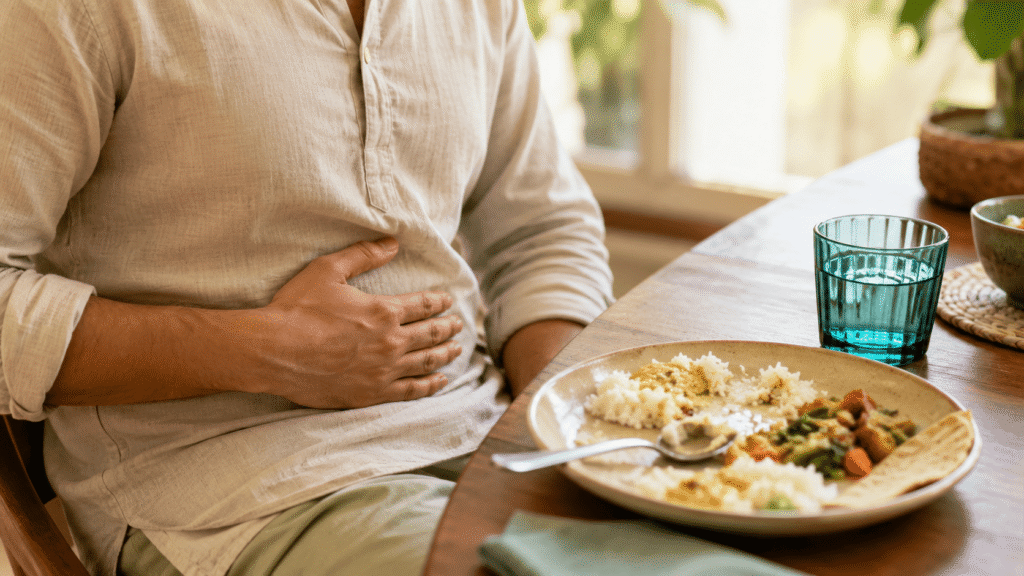
Ayurvedic treatment for gas and bloating traditionally aims to support digestive function and bring more regularity to eating, elimination, and daily routine.
Ayurveda uses concepts such as Agni, or digestive capacity, and Vata, which is associated with movement. A qualified practitioner may consider appetite, stool pattern, abdominal discomfort, food tolerance, sleep, stress, and lifestyle before suggesting treatment.
A personalized plan may involve:
| Approach | Traditional focus | Practical example |
|---|---|---|
| Meal routine | Regular digestive rhythm | Eat around consistent times |
| Food adjustment | Reduce individual triggers | Modify foods that repeatedly cause symptoms |
| Culinary herbs | Traditional digestive support | Ginger, cumin, ajwain, or fennel |
| Gentle movement | Support normal bowel activity | Walk after meals |
| Constipation care | Support regular elimination | Personalized diet and lifestyle changes |
| Ayurvedic therapy | Individualized care | Practitioner-guided treatment |
Modern medicine and Ayurveda use different frameworks for understanding digestive symptoms. A responsible treatment plan keeps those differences clear and uses medical evaluation when symptoms suggest an underlying condition.
Which Ayurvedic herbs help with gas and bloating?
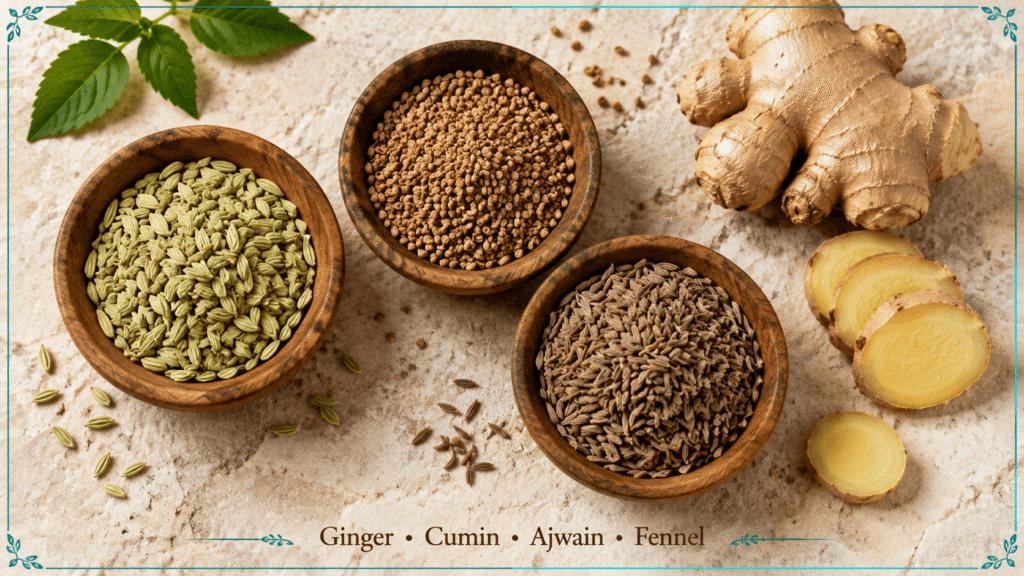
Ayurvedic treatment for gas and bloating may include herbs and spices that have traditional digestive uses. Ginger, cumin, ajwain, and fennel are commonly used in Indian food and traditional preparations.
- Ginger: Ginger has a long history of traditional use for digestive complaints. Clinical research provides stronger evidence for nausea and vomiting than for bloating specifically, so it shouldn’t be presented as a proven cure for every type of gas. Fresh ginger in food or a mild ginger drink may suit some people. Those with reflux or sensitivity to spicy foods may find it uncomfortable.
- Cumin: Cumin is widely used in Indian cooking and traditional digestive preparations. Adding it to cooked food is a simple option for people who already tolerate it.
- Ajwain: Ajwain, also called carom seed, is traditionally used for digestive discomfort and gas. It appears in many Indian bloating and gas home remedies. Concentrated preparations deserve more caution than normal culinary use. Herbs can interact with medicines, and product quality can vary.
- Fennel: Fennel seeds are another traditional digestive option. Some people chew a small quantity after meals, although evidence for specific bloating benefits depends on the preparation and condition.
If symptoms recur often, a practitioner should decide whether an herb is appropriate rather than adding several products at once.
🌿 Explore Herbal Remedies
Looking to harness the digestive power of fresh Adrak?
Learn how ginger acts as a core component in holistic Ayurvedic treatment for gas and bloating in our complete guide:
What Ayurvedic diet changes can reduce bloating?
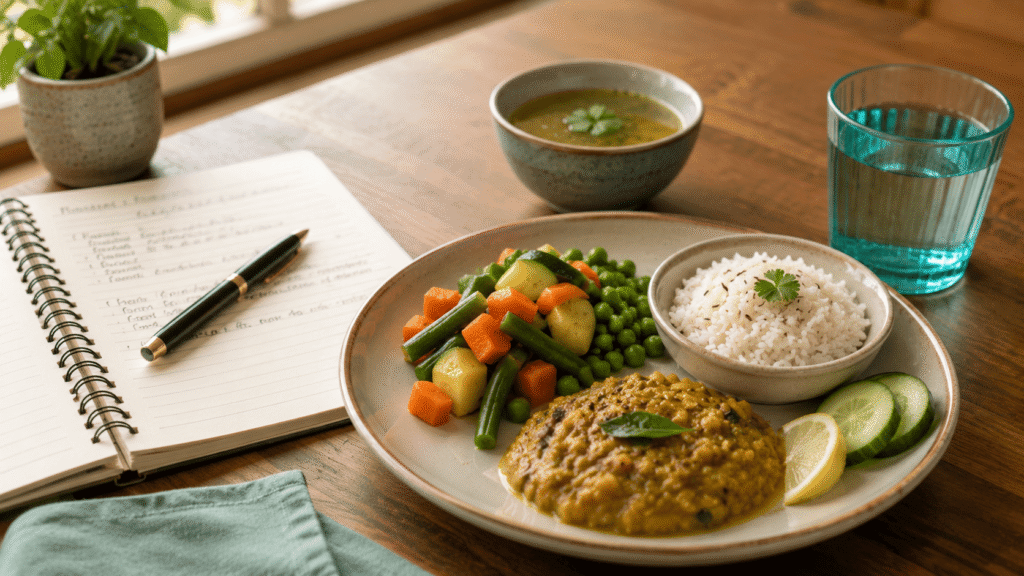
Ayurvedic treatment for gas and bloating becomes more practical when your everyday eating pattern is addressed.
Start with habits that have a reasonable digestive basis instead of immediately buying an Ayurvedic gastric medicine name from an online search.
- Eat slowly: Eating quickly can increase swallowed air. NIDDK recommends slowing down, avoiding fizzy drinks and chewing gum, and sitting down to eat when possible. Try putting your phone down for the first few minutes of a meal. You may notice that you eat more slowly without making a special effort.
- Keep portions moderate: Large meals can leave you feeling overly full. Smaller meals may reduce symptoms for some people, particularly when large portions repeatedly trigger discomfort.
- Track your food triggers: No single food causes gas for everyone. Beans, lentils, some fruits, dairy, cruciferous vegetables, certain sweeteners, and high-fiber foods can increase gas symptoms in some people. High-fat foods can also worsen bloating for some individuals. A food diary gives you something more useful than a generic “avoid these foods” list.
- Increase fiber gradually: Fiber supports digestive health, but a sudden increase can cause more gas and bloating. NIDDK recommends increasing fiber gradually for people who need more fiber in their diet.
If constipation is part of your problem, don’t remove fiber without considering the bigger dietary picture.
What are the best bloating and gas home remedies?

Bloating and gas home remedies are most useful for occasional discomfort and should remain simple.
Try:
- Taking a gentle walk after eating.
- Eating the next meal slowly.
- Limiting carbonated drinks.
- Drinking a mild warm beverage if it suits you.
- Avoiding a very large meal while you’re uncomfortable.
- Noting the food or drink that preceded the symptoms.
- Following your usual hydration routine unless a clinician has advised otherwise.
No home remedy can reliably make bloating disappear in five minutes. Fast-cure claims deserve skepticism.
A short walk can be particularly easy to add after lunch or dinner. It costs nothing, requires no supplement, and fits into a normal day.
Which Ayurvedic therapies may be used for recurring bloating?
Ayurvedic treatment for gas and bloating may include practitioner-guided therapies when dietary and lifestyle assessment alone doesn’t address recurring symptoms.
The exact therapy should depend on the person’s symptoms and Ayurvedic assessment. Depending on the clinical setting, an Ayurvedic practitioner may consider approaches involving the following:
- Abhyanga or Ayurvedic oil massage as part of a broader care plan
- Dietary and daily-routine correction
- Yoga or gentle movement suited to the individual
- Practitioner-guided digestive support
- Selected Panchakarma procedures when clinically appropriate
Panchakarma should not be treated as a universal detox for bloating. The procedures, preparation, and suitability need professional assessment.
For a condition-library page, this is also a useful place to link to your detailed Panchakarma therapy guide and Ayurvedic digestive treatment page.
The goal is personalization. Someone with constipation and bloating may need a different plan from someone whose symptoms appear after dairy or large meals.
✨ Deepen Your Detox Knowledge
Curious about how classical Panchakarma resets your digestion?
Understand how metabolic cleansing integrates into long-term Ayurvedic treatment for gas and bloating in our beginner’s guide:
Is there one best Ayurvedic medicine for gas and bloating?
There is no single best Ayurvedic medicine for gas and bloating for everyone.
Searches for the best Ayurvedic medicine for gastric problems, Ayurvedic medicine for gas and acidity, or Ayurvedic medicine for gas, acidity, and constipation can produce long product lists. A product name alone doesn’t tell you whether the formulation fits your symptoms.
The same applies to searches for gas Ayurvedic medicine Patanjali, Baidyanath Ayurvedic medicine for gas and acidity, Himalaya Ayurvedic medicine for gas and acidity, or Kottakkal Ayurvedic medicine for gut health.
Brand selection should never replace symptom assessment.
Safety deserves attention too. NCCIH reports that some Ayurvedic preparations have contained potentially toxic amounts of lead, mercury, or arsenic. It also notes that scientific evidence for many Ayurvedic uses remains limited.
For recurring digestive problems, discuss herbal products with a qualified practitioner and, when appropriate, your medical doctor or pharmacist.
🩺 Targeted Vata Therapy
Struggling with chronic lower abdominal bloating or constipation?
Discover how Basti (medicated enema) serves as a primary therapy in clinical Ayurvedic treatment for gas and bloating in our in-depth article:
What should you avoid when you have frequent gas?
Ayurvedic treatment for gas and bloating works better when habits that repeatedly trigger symptoms are identified and reduced.
Watch for:
- Eating meals very quickly
- Frequent fizzy drinks
- Chewing gum throughout the day
- Very large portions
- Foods that consistently trigger symptoms
- Sudden increases in fiber
- Multiple herbal products taken together
- Heavy meals close to bedtime
NIDDK also recommends looking at swallowed air and individual dietary triggers when managing gas symptoms.
You don’t need to eliminate half your kitchen after one uncomfortable meal. Look for patterns first.
Can Ayurvedic treatment for gas and bloating help in 7 days?
Ayurvedic treatment for gas and bloating may improve symptoms for some people when food and lifestyle triggers are addressed, but there is no reliable seven-day cure.
A seven-day tracking period can still be useful.
Days 1 to 2: Record meals, drinks, bowel movements, and bloating.
Days 3 to 5: Reduce obvious personal triggers while keeping meals familiar.
Days 6 to 7: Compare your symptoms with the first two days.
NIDDK notes that food and symptom diaries can help healthcare professionals identify possible dietary triggers and understand the pattern of gas symptoms.
If symptoms keep returning, take your notes to your practitioner. A pattern is much more useful than guessing which food or herb caused the problem.
What can you do for gas and bloating every day?
Ayurvedic treatment for gas and bloating can start with a simple daily routine before adding supplements.
Morning: Have your normal breakfast at a comfortable pace.
Meals: Sit down, chew thoroughly, and avoid rushing.
After meals: Take a short walk instead of lying down immediately.
Evening: Keep dinner moderate if large late meals trigger symptoms.
Tracking: Record recurring food triggers and bowel changes.
Herbs: Use only products that suit your health status and medicines.
Small changes are easier to maintain than a complicated routine containing six teas, four powders, and a supplement drawer that looks like a pharmacy.
Ayurvedic treatment for gas and bloating vs. quick fixes
Ayurvedic treatment for gas and bloating works best when you look beyond temporary relief and pay attention to the habits or triggers behind recurring symptoms. The table below compares simple supportive approaches with practitioner-guided care, so you can see where each option fits.
| Approach | Useful for | Main limitation |
|---|---|---|
| Meal timing | Irregular eating patterns | Doesn’t diagnose an underlying condition |
| Food diary | Finding personal triggers | Requires consistent tracking |
| Gentle walking | Post-meal discomfort | Not suitable as treatment for severe symptoms |
| Culinary herbs | Traditional digestive support | Evidence varies by herb |
| Practitioner-guided Ayurveda | Individualized care | Requires qualified assessment |
| Medical evaluation | Persistent or concerning symptoms | May require testing |
Quick relief has a place for occasional discomfort, but recurring bloating needs a better question: what keeps triggering it?
When should you see a doctor for bloating?
Ayurvedic treatment for gas and bloating should not replace medical evaluation when symptoms are persistent, severe, or changing.
Talk with a doctor if bloating occurs regularly, continues despite dietary changes, or comes with unintentional weight loss or blood in the stool.
Medical assessment also becomes important when gas or bloating occurs with abdominal pain, constipation, diarrhea, or a sudden change in your usual symptoms.
Urgent care is appropriate for severe sudden abdominal pain, vomiting blood, severe breathing difficulty, or a swollen abdomen when you cannot pass stool or gas.
Ayurveda may be used as complementary care when appropriate. Serious or unexplained symptoms need proper diagnosis first.
Conclusion
Ayurvedic treatment for gas and bloating is best approached as personalized digestive care rather than a search for one miracle medicine.
Regular meal timing, slower eating, suitable foods, gentle movement, traditional digestive herbs, and practitioner-guided Ayurvedic care may all have a place in an individual plan. At the same time, recurring symptoms should be assessed for possible medical causes.
Scientific evidence for many Ayurvedic preparations remains limited, and some Ayurvedic products have raised safety concerns.
If bloating keeps returning, don’t keep switching between random remedies. Book a condition consultation so your symptoms and daily habits can be reviewed before deciding on the next step.
 |
Ready to take the next step?At Vedic Panchakarma, we believe true healing begins by restoring balance within the body, mind, and spirit, naturally and holistically. Body • Mind • Spirit |
|
📍 Location: SA 6/168 Old RTO Office Chauraha, Sarnath, Ganapati Nagar, Ashapur Road, Pahariya, Sarnath-221007, Uttar Pradesh 📞 Contact: +91 96822 22121 ✉️ Website: vedicpanchakarma.com 🕒 Hours: Open 24 Hours |
FAQs About Ayurvedic Treatment for Gas and Bloating
Can bloating happen even when you haven’t eaten much?
Yes. Bloating can occur without a large meal. Constipation, digestive disorders, hormonal changes, swallowed air, and increased sensitivity to normal intestinal gas can all contribute.
Why does my stomach look bigger at night?
Abdominal size can change during the day because of food volume, fluid, gas, bowel contents, and normal digestive activity. A persistent or progressive change should be discussed with a healthcare professional.
Can hormonal changes affect bloating?
Yes. Some people notice bloating around their menstrual cycle. If the symptom is new, severe, or persistent, it deserves individual assessment rather than being automatically attributed to hormones.
Can dehydration make constipation and bloating worse?
Inadequate fluid intake can contribute to harder stools in some people, and constipation can accompany bloating. Individual fluid needs vary, especially with kidney, heart, or other medical conditions.
Is burping the same as intestinal gas?
No. Burping releases swallowed air or gas through the mouth, while intestinal gas leaves through the anus. Both can occur normally, although frequent symptoms may need assessment.
Can food intolerance develop in adulthood?
Yes. Digestive symptoms after particular foods can occur in adults, including problems digesting lactose or fructose. Repeated symptoms after the same food are worth discussing with a healthcare professional rather than self-diagnosing.
Can bloating be related to an underlying gastrointestinal condition?
Yes. IBS, functional dyspepsia, constipation, lactose intolerance, and other gastrointestinal conditions can produce bloating or gas symptoms.


 Old RTO Chauraha, Sarnath, Varanasi 221007