Basti Treatment: 7 Essential Benefits, Types & Procedure
Medical Disclaimer
This content is for educational purposes only and not medical advice. Consult a qualified physician or Ayurvedic practitioner before starting therapies, especially if pregnant or on medication.
Consult a practitioner
Basti treatment is one of the five major Panchakarma therapies in Ayurveda and is traditionally used for Vata-related health concerns. The therapy involves administering a prescribed medicated preparation through the rectal route under professional supervision. The preparation may be oil-based, decoction-based, or formulated according to the person’s treatment plan.
I know the word “medicated enema” can make people pause. Yet the clinical procedure is quite different from grabbing an over-the-counter enema and trying it yourself. The practitioner assesses your condition, selects the preparation, decides the dose and timing, and monitors you afterward.
If you’re considering Basti as part of Panchakarma, this guide covers the procedure, major types, traditional benefits, possible side effects, safety, cost factors, and the questions worth asking before treatment.
✓
Panchakarma in Monsoon at a Glance
6 Key Insights
01
02
.
03
.
04
05
06
Basti treatment is a key Ayurvedic Panchakarma therapy involving the medically supervised rectal administration of herbal decoctions (Niruha) or medicated oils (Anuvasana). Designed primarily to balance Vata dosha, relieve digestive discomfort, and alleviate joint stiffness, it must be clinically personalized and professionally administered rather than attempted as a DIY procedure.
What Is Basti Treatment in Ayurveda?
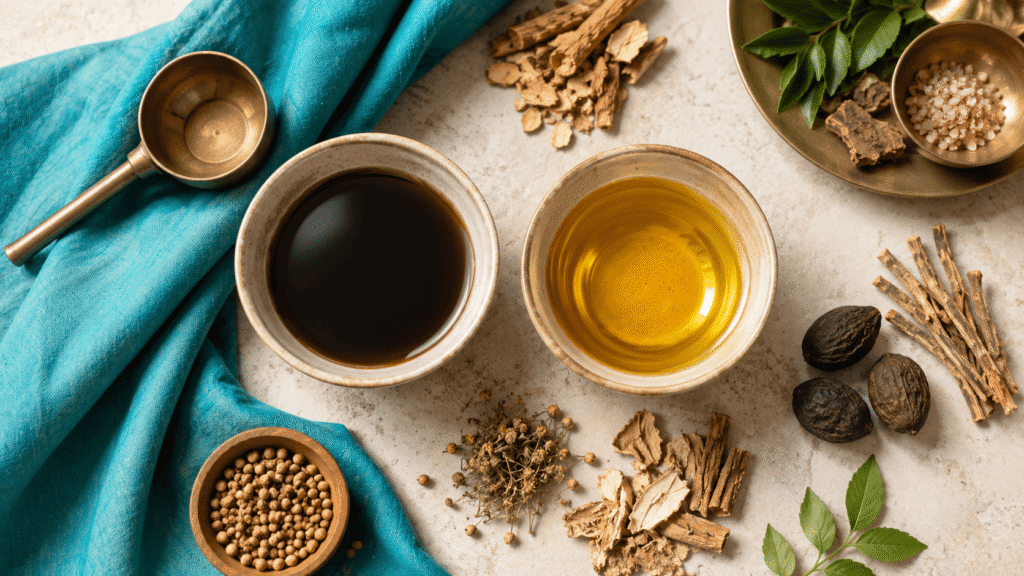
Basti treatment is an Ayurvedic therapy in which a prescribed medicinal preparation is administered through the rectal route. Classical Ayurvedic teaching places particular importance on Basti in the management of Vata-related disorders.
Basti is part of Panchakarma, the traditional Ayurvedic group of therapeutic procedures. Government Ayurveda teaching material covers Basti classification, preparation, administration, diet, post-treatment care, indications, contraindications, and possible complications as separate areas of clinical training.
The preparation isn’t always the same.
Depending on the treatment plan, Basti may contain a medicated oil, herbal decoction, honey, rock salt, herbal paste, or other prescribed ingredients. Niruha and Anuvasana Basti are the two broad forms most people encounter when researching the therapy.
Calling every Basti simply an “enema” misses an important point. The word describes the route of administration, while the Ayurvedic treatment plan determines the preparation, purpose, timing, and method.
Why Is Basti Part of Panchakarma?
Basti panchakarma is traditionally associated with Vata management and is one of the five major Panchakarma procedures. Ayurvedic teaching resources describe Basti as an important therapy with specific protocols for different formulations and clinical situations.
Ayurvedic practitioners may consider Basti when assessing complaints associated with Vata, including certain patterns of constipation, stiffness, pain, or musculoskeletal discomfort. The exact indication depends on the individual assessment.
Modern research has investigated Basti in several areas, but the evidence is uneven. A PubMed-indexed clinical study, for example, examined Matra Basti alongside Nirgundi Ghana Vati in people with sciatica, while other studies have investigated different Basti formulations for specific conditions. These studies shouldn’t be treated as proof that Basti works for every Vata-related complaint.
That distinction keeps the article honest: classical Ayurvedic indications are not the same thing as modern clinical evidence.
🌿 Foundations of Ayurveda
New to Ayurvedic Detox Therapies?
Understand how Basti fits into the broader 5-stage cleansing process in our comprehensive guide:
Basti Treatment Types: Niruha and Anuvasana
The two major types are Niruha Basti and Anuvasana Basti. Their primary difference is the type of preparation used.
| Feature | Niruha Basti | Anuvasana Basti |
|---|---|---|
| Other names | Asthapana Basti | Sneha Basti |
| Main preparation | Decoction-based | Oil or other unctuous preparation |
| Traditional role | Used in specific Panchakarma protocols | Traditionally associated with oleation and Vata management |
| Formulation | Varies by prescription | Varies by prescription |
| Administration | Rectal route | Rectal route |
| Frequency | Depends on the treatment plan | Depends on the treatment plan |
A clinical review in the Ayurvedic literature describes decoction-dominant Basti as Asthapana or Niruha Basti and oil-dominant Basti as Anuvasana Basti.
What Is Niruha Basti?
Niruha Basti is a decoction-based form of Basti, also called Asthapana Basti. Traditional formulations may combine an herbal decoction with ingredients such as honey, rock salt, oil, and herbal paste, with the exact composition selected according to the prescribed protocol.
Niruha Basti requires more than choosing a random herbal decoction. Dose, ingredients, preparation sequence, administration technique, timing, and post-treatment care all form part of the clinical procedure.
Government Ayurveda College training material specifically includes Niruha Basti preparation, age-based dose considerations, administration, diet, post-treatment management, and complications in its Panchakarma curriculum.
What Is Anuvasana Basti?
Anuvasana Basti is primarily an oil-based or unctuous Basti administered through the rectal route. Ayurvedic teaching resources describe it as a therapy particularly associated with Vata-related conditions and unctuousness.
The oil isn’t necessarily the same for every patient. Ayurvedic literature describes individualized selection and dosing, and a 2026 review specifically notes the importance of dose fixation in Anuvasana Basti.
So when someone asks about the difference between Niruha Basti and Anuvasana Basti, the simplest answer is that Niruha is primarily decoction-based, while Anuvasana is primarily oil-based. The clinical decision goes much further than that basic distinction.
How Is Basti Treatment Performed?
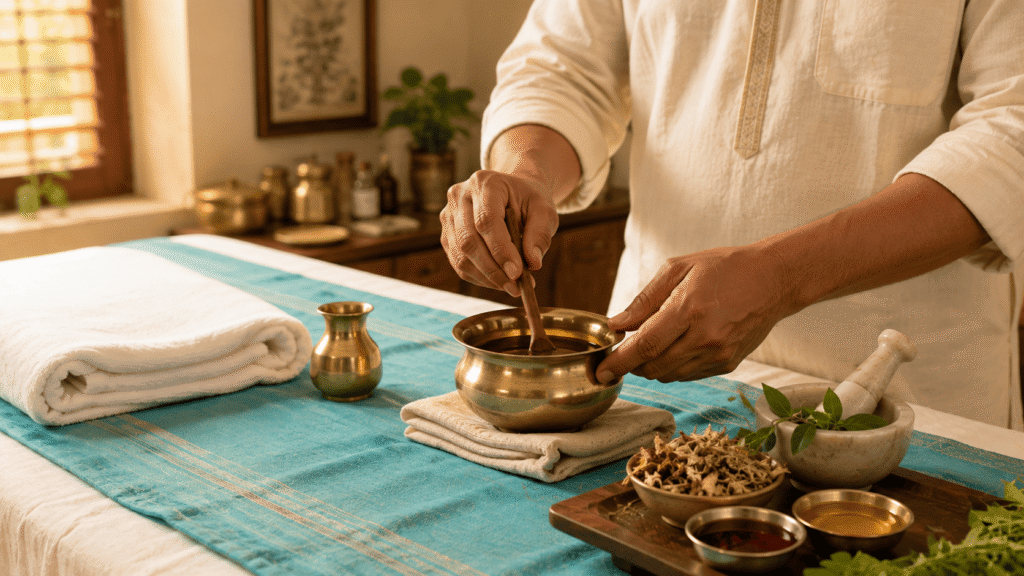
The Basti treatment procedure begins with assessment and preparation before the medication is administered.
The practitioner may review your symptoms, digestion, bowel habits, age, health history, and treatment goals. Depending on the protocol, preparatory measures such as massage or heat therapy may also be used.
A typical supervised procedure may involve:
- Clinical assessment: The practitioner determines whether Basti is appropriate.
- Preparation: Dietary or preparatory instructions are provided according to the treatment plan.
- Positioning: You are positioned appropriately for administration.
- Medicine preparation: The prescribed Basti formulation is prepared according to the protocol.
- Administration: The preparation is administered through the rectal route.
- Observation: Your response is monitored.
- Aftercare: Diet, rest, activity, and follow-up instructions are provided.
Traditional and modern equipment can differ. A published review of Basti administration describes classical Basti equipment as well as contemporary enema-based equipment used in some clinical settings.
The procedure therefore shouldn’t be reduced to a five-minute DIY instruction from a video. Technique, formulation, hygiene, and patient selection all matter.
What Are the Benefits of Basti Treatment?

Basti treatment benefits are described in Ayurveda mainly in relation to Vata management and selected clinical conditions.
Traditional Ayurvedic practice may use different Basti formulations for concerns involving
- Constipation and altered bowel habits
- Certain musculoskeletal complaints
- Stiffness and restricted movement
- Some chronic pain presentations
- Selected neurological conditions
- Certain reproductive-health protocols
Research has explored specific formulations for specific conditions. One PubMed-indexed study examined Gokshura-Punarnava Basti in people with diabetes and microalbuminuria, while another studied Matra Basti in people with sciatica. These studies investigated particular protocols, so their findings shouldn’t be generalized to Basti as a treatment for every condition.
Modern evidence for Ayurveda as a whole remains limited in many areas. The U.S. National Center for Complementary and Integrative Health notes that relatively few well-designed clinical trials exist for many Ayurvedic approaches.
For that reason, a responsible clinic should explain both the traditional rationale and the limits of current evidence.
Is Basti Treatment Painful?
Basti treatment isn’t expected to cause severe pain when performed correctly, although pressure, fullness, cramping, or an urge to pass stool may occur.
Tell the practitioner if you experience significant pain during administration. You don’t need to silently tolerate it.
General medical guidance for enemas also identifies potential risks from improper technique, including rectal injury, bleeding, infection, and other complications. Basti should therefore be administered using appropriate equipment and clinical hygiene rather than improvised at home.
What Are the Basti Treatment Side Effects?
Basti treatment side effects can vary according to the preparation, dose, technique, and individual patient.
Some people may experience temporary abdominal discomfort, bowel urgency, cramping, or changes in bowel movements. More serious problems require medical attention.
General enema safety guidance identifies possible complications such as tissue injury, infection, bleeding, dehydration, and electrolyte disturbances in certain circumstances.
Ayurvedic medicines also deserve attention. NCCIH notes that some Ayurvedic preparations have contained potentially toxic levels of heavy metals, including lead, mercury, or arsenic.
Ask the clinic what preparation is being used, where it comes from, and who is responsible for prescribing it.
Can You Do Basti Treatment at Home?
Basti treatment at home should not be started without guidance from a qualified Ayurvedic practitioner.
Online searches for “basti treatment at home” often make the procedure look easier than it is. The clinical plan involves more than administering liquid through the rectal route.
The practitioner needs to decide whether the therapy is suitable, select the preparation, determine the dose, review contraindications, and provide aftercare instructions. Government Ayurveda College training material lists these elements as part of formal Basti training.
DIY administration also creates avoidable hygiene and injury risks. A home kit doesn’t provide the same clinical assessment.
What Should You Eat During Basti?
Diet during Basti depends on the specific Panchakarma protocol and your individual assessment.
Some treatment plans use lighter meals and specific meal timing around the procedure. Your practitioner may also give dietary instructions for the days surrounding a Basti course.
Don’t assume that fasting, a liquid diet, or a particular “detox diet” is required. Follow the plan provided by the practitioner handling your treatment.
Is Monsoon a Good Time for Basti?
Ayurvedic traditions commonly associate the monsoon season with Basti therapy, particularly in protocols aimed at Vata management.
Seasonal treatment still needs individual assessment. Rainy weather alone doesn’t mean everyone should undergo Basti.
🌧️ Seasonal Panchakarma Care
Why monsoon is an important season in Ayurveda
Learn how seasonal humidity affects your body and why rains provide the ideal climate for Panchakarma detox:
That link can explain seasonal routines, diet, and Panchakarma planning without repeating the same information on this page.
Does Basti Reduce Weight?
Basti shouldn’t be presented as a standalone weight-loss treatment. Some studies have reported changes in weight as part of broader Ayurvedic treatment programs, but that doesn’t establish Basti as a general weight-management therapy.
A better approach is to identify the reason behind unwanted weight gain and assess diet, physical activity, sleep, medications, metabolic health, and other relevant factors. Basti should only be considered within an appropriate Ayurvedic treatment plan.
Basti Treatment for Infertility: What Should You Know?
Basti treatment for infertility has been discussed in Ayurvedic literature and investigated in small clinical studies, but current evidence isn’t strong enough to treat it as a proven fertility therapy.
Research has examined specific Basti formulations alongside other Ayurvedic interventions for reproductive concerns. Study results can be useful for research, but small samples and specific treatment protocols limit how broadly those findings apply.
Anyone undergoing fertility treatment should also receive appropriate medical evaluation. Infertility can involve ovulation, ovarian reserve, fallopian tubes, the uterus, sperm factors, age, hormones, or several causes at once.
Basti should not replace evaluation or treatment recommended by a fertility specialist.
How Much Does Basti Treatment Cost?
Basti treatment cost varies by clinic, formulation, number of sessions, consultation fees, and whether it forms part of a Panchakarma package.
There isn’t one standard price that applies to every clinic.
Before booking, ask whether the quoted fee includes:
- Initial Ayurvedic consultation
- Basti medicine and preparation
- Number of planned sessions
- Abhyanga or Swedana, if prescribed
- Post-treatment consultation
- Additional medicines
- Accommodation, if part of a residential Panchakarma program
A clinic advertising a low Basti panchakarma cost may be quoting for the procedure alone, while another clinic may include several therapies in the package.
Price should therefore be compared only after you know what the package contains.
What Happens After Basti Treatment?
After basti treatment, the practitioner may recommend rest, dietary changes, hydration, and limits on strenuous activity.
Your immediate response depends on the type of Basti and the treatment protocol. Some preparations may produce an urge to evacuate relatively soon, while oil-based Basti follows a different retention pattern.
Don’t judge the treatment only by how much stool passes afterward. The practitioner evaluates the response against the purpose of the prescribed Basti.
When Should You Avoid Basti?

Basti isn’t appropriate for everyone.
A practitioner should review your health before treatment, particularly if you have active bowel or rectal problems, unexplained bleeding, severe abdominal symptoms, recent surgery, pregnancy, or another condition that could affect the safety of rectal administration.
Don’t hide symptoms because you’ve already paid for a Panchakarma package. A responsible practitioner can postpone or change a procedure when your health calls for it.
Government Ayurveda College training material specifically includes indications, contraindications, complications, and their management in Basti education.
🩺 Targeted Health Solutions
Managing Hemorrhoids with Ayurveda?
Explore safe protocols, dietary changes, and specialized herbal management in our overview:
Conclusion
Basti treatment remains an important therapy within traditional Ayurvedic Panchakarma, particularly in approaches focused on Vata. Niruha Basti and Anuvasana Basti are the two major forms, with different preparations and clinical applications.
The treatment deserves the same care you’d expect from any clinical procedure. Proper assessment, formulation, dosage, equipment, hygiene, administration, and aftercare all belong to the process.
Modern research has investigated Basti for several specific health conditions, but the evidence is still limited for many uses. A trustworthy practitioner should explain what Ayurveda recommends, what research has found, and where the evidence remains uncertain.
If you’re considering Basti, speak with our Ayurvedic team before starting. Enquire about Basti therapy to discuss your health concerns, treatment goals, suitability, and the type of Panchakarma plan that may be appropriate for you.
 |
Ready to take the next step?At Vedic Panchakarma, we believe true healing begins by restoring balance within the body, mind, and spirit, naturally and holistically. Body • Mind • Spirit |
|
📍 Location: SA 6/168 Old RTO Office Chauraha, Sarnath, Ganapati Nagar, Ashapur Road, Pahariya, Sarnath-221007, Uttar Pradesh 📞 Contact: +91 96822 22121 ✉️ Website: vedicpanchakarma.com 🕒 Hours: Open 24 Hours |
Frequently Asked Questions
Can Basti be performed during menstruation?
The decision depends on the type of Basti, the reason for treatment, and the individual’s condition. Ask your Ayurvedic practitioner before scheduling a session during menstruation.
Is Basti suitable for older adults?
Age alone doesn’t determine suitability. An Ayurvedic practitioner should assess strength, digestion, existing conditions, medications, and the specific Basti being considered before treatment.
Can children receive Basti treatment?
Basti protocols for children differ from adult treatment and require age-appropriate assessment and dosing. Parents should never adapt an adult Basti preparation for a child without qualified medical guidance.
Can Basti interact with prescription medicines?
Potential interactions depend on the medicines being used and the person’s health condition. Tell both your Ayurvedic practitioner and medical doctor about all treatments and medicines you use.
Can Basti be given to someone with hemorrhoids?
Active hemorrhoids or rectal symptoms require assessment before any rectal therapy. Don’t proceed based on a generic Basti schedule without discussing the condition with a qualified practitioner.
How should I choose an Ayurvedic clinic for Basti?
Check the practitioner’s qualifications, clinic hygiene, consultation process, medicine sourcing, informed-consent process, and whether the clinic explains risks and alternatives before starting treatment.
Can Basti replace conventional medical treatment?
Basti shouldn’t automatically replace prescribed medical treatment. For a diagnosed condition, discuss complementary Ayurvedic therapy with your treating healthcare professional so that important medical care isn’t delayed.

 Old RTO Chauraha, Sarnath, Varanasi 221007