Ayurvedic Treatment for Piles (Hemorrhoids): Causes, Therapies and Diet
Table of Contents
ToggleMedical Disclaimer
This article is for general educational purposes only and does not replace professional medical diagnosis or treatment. Rectal bleeding, severe pain, or persistent symptoms require immediate evaluation by a qualified physician or Ayurvedic practitioner before starting therapies.
Consult a practitioner
Ayurvedic treatment for piles can include diet changes, bowel habit correction, Ayurvedic medicines, local therapies, and selected procedures such as Kshara Karma. The right option depends on the type and severity of hemorrhoids, your symptoms, bowel habits, and clinical assessment.
Piles, or hemorrhoids, are common. Constipation and straining can make symptoms worse, but rectal bleeding should never be assumed to be piles without proper evaluation. NIDDK notes that bleeding can have causes other than hemorrhoids.
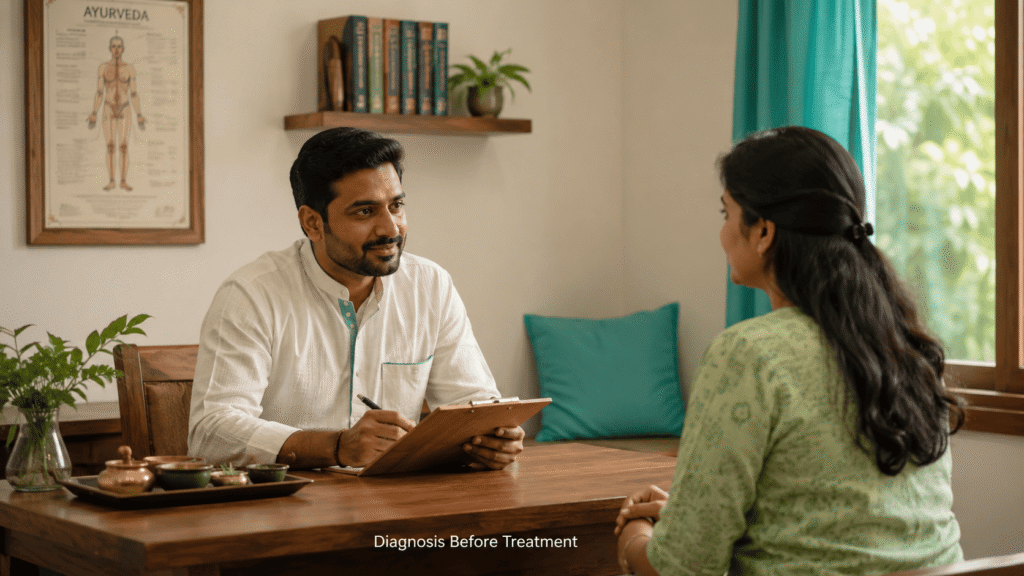
If you’re considering Ayurveda, start with the diagnosis rather than the medicine. That one step can prevent a lot of guesswork.
✓
Panchakarma in Monsoon at a Glance
6 Key Insights
01
02
03
04
05
06
Ayurvedic treatment for piles is best selected after considering your symptoms, bowel habits, and the type of hemorrhoid involved.
What Are Piles?
Piles are swollen and inflamed veins around the anus or in the lower rectum. Internal hemorrhoids develop inside the anal canal, while external hemorrhoids form under the skin around the anus.
Internal piles commonly cause bright red rectal bleeding or prolapse. External piles may cause itching, tenderness, pain, or a hard lump near the anus.
Common symptoms include:
- Bright red blood during or after a bowel movement
- Anal itching or irritation
- Pain or tenderness
- A lump around the anus
- Prolapse of an internal hemorrhoid
- Discomfort during bowel movements
Constipation, straining, prolonged toilet sitting, chronic diarrhea, low fiber intake, pregnancy, aging, and frequent heavy lifting are among the factors associated with hemorrhoids.
In Ayurveda, piles are traditionally discussed under Arsha. An Ayurvedic assessment may consider the person’s symptoms, bowel habits, digestion, constitution, and presentation before selecting treatment.
Ayurvedic Treatment for Piles: What Are the Options?
Ayurvedic treatment for piles isn’t one tablet or one procedure. Treatment may involve several layers, starting with bowel and dietary habits and progressing to medicines or procedures when clinically appropriate.
The seven main areas are:
- Ayurvedic diet and bowel management
- Individualized Ayurvedic medicines
- Supportive home care
- Local Ayurvedic therapies
- Kshara Karma
- Kshara Sutra in selected anorectal conditions
- Lifestyle and recurrence prevention
A useful treatment plan should answer two questions first: What type of piles do you have, and how severe are they?
1. Ayurvedic Diet for Piles
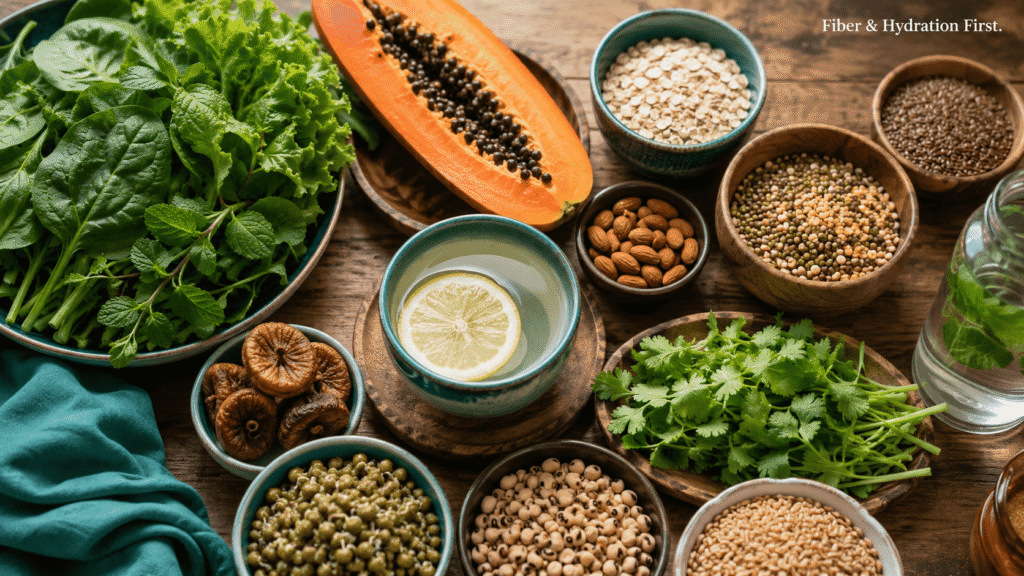
An Ayurvedic diet for piles should support comfortable, regular bowel movements and reduce constipation and straining.
Diet is an important foundation of Ayurvedic treatment for piles, particularly when constipation and straining contribute to symptoms.
Fiber is important here. NIDDK states that high-fiber foods can make stools softer and easier to pass and can help treat and prevent hemorrhoids. Drinking adequate fluids helps fiber work effectively.
Good food choices can include:
- Vegetables and leafy greens
- Fresh fruits
- Whole grains
- Fiber-rich legumes if tolerated
- Other naturally fiber-rich foods
- Adequate fluids
U.S. dietary guidance cited by NIDDK recommends about 14 grams of fiber per 1,000 calories. For a 2,000-calorie diet, that works out to about 28 grams daily. Individual needs can differ.
Don’t suddenly add a large amount of fiber if your current diet is low in it. Increase fiber gradually and maintain adequate fluid intake.
Foods with little or no fiber, including many processed foods, fast foods, chips, and similar low-fiber choices, may be worth reducing when constipation is contributing to hemorrhoid symptoms.
Your Ayurvedic practitioner can further tailor the diet to your digestive tolerance and symptoms.
🌿 Explore Deeper Ayurvedic Care
Looking to support your digestive health and bowel regularity naturally?
Learn how simple kitchen remedies can enhance digestion and soothe irritation in our comprehensive guide:
2. Ayurvedic Medicine for Piles
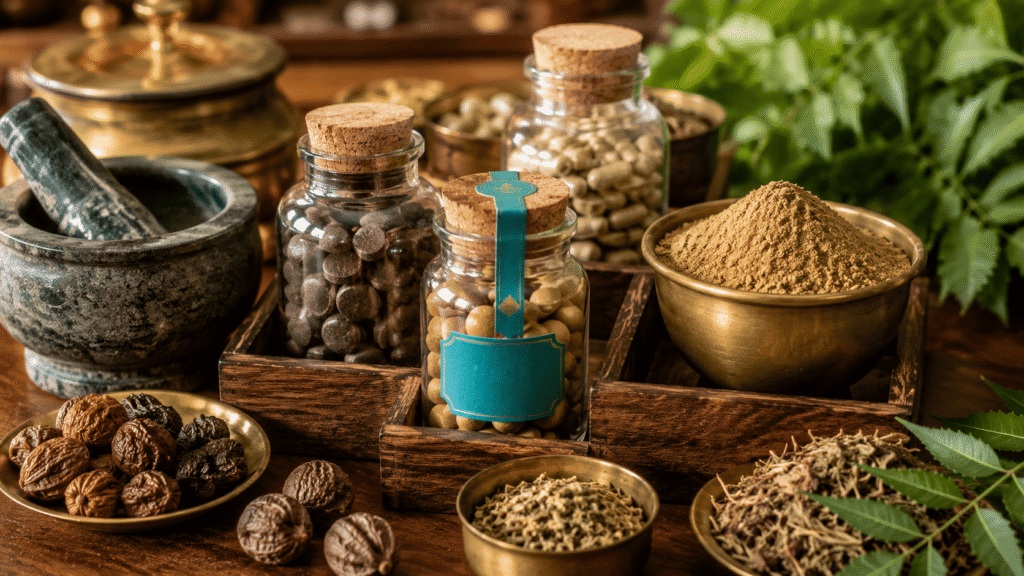
Ayurvedic treatment for piles is not simply about choosing a popular medicine and hoping the symptoms disappear. Ayurvedic medicine for piles may involve herbal or classical formulations selected according to the person’s symptoms and assessment.
A common mistake is searching for the “best Ayurvedic tablet for piles” and choosing whichever product has the strongest marketing. Piles don’t work that neatly.
The medicine should be selected according to factors such as the following:
- Type of hemorrhoid
- Bleeding or non-bleeding symptoms
- Constipation or loose stools
- Pain and irritation
- Other medicines being taken
- Pregnancy or other health considerations
- The practitioner’s Ayurvedic assessment
Avoid treating rectal bleeding with an over-the-counter or online Ayurvedic product without first establishing its cause. NIDDK notes that rectal bleeding can occur with several digestive conditions, including problems other than hemorrhoids.
That makes professional assessment especially important for recurrent or unexplained bleeding.
3. Piles Hemorrhoids Home Remedies
Hemorrhoid pile home remedies can support mild symptoms, particularly when constipation and straining are part of the problem. Home care can complement Ayurvedic treatment for piles when symptoms are mild, but it should not replace evaluation when symptoms are persistent or concerning.
Useful measures include:
- Eat more fiber-rich foods.
- Drink enough fluids for your individual needs.
- Avoid straining during bowel movements.
- Don’t sit on the toilet for long periods.
- Stay physically active.
- Consider warm-water sitz baths for temporary discomfort.
- Don’t repeatedly delay the urge to pass stool.
NIDDK recommends fiber, fluids, avoiding straining, limiting toilet time, and warm-water baths as part of conservative hemorrhoid care.
A simple bowel routine can also help. If constipation continues despite dietary changes, discuss it with a healthcare professional rather than repeatedly increasing home remedies.
4. Local Ayurvedic Therapies
Local therapies may be considered when symptoms need more targeted care.
Local therapies may form part of Ayurvedic treatment for piles when targeted care is appropriate.
The exact therapy depends on the diagnosis. A practitioner may consider the location of the hemorrhoid, bleeding, pain, prolapse, tissue condition, and other findings before selecting a local approach.
This is one reason generic “piles treatment at home” lists have limitations. Two people can describe their symptoms as piles while needing very different care.
A clinical examination can also help distinguish hemorrhoids from other anorectal conditions. NIDDK notes that diagnosis may involve medical history, examination of the anal area, a digital rectal examination, and, when needed, procedures to inspect the anus and rectum.
🌿 Explore Deeper Ayurvedic Care
Curious about external Ayurvedic oils and therapies?
Discover the traditional therapeutic applications, safe dosages, and benefits of medicinal oils in our detailed resource:
5. Kshara Karma in Ayurvedic Treatment for Piles
Kshara Karma is a specialized Ayurvedic procedure that uses an alkaline preparation locally on selected tissue.
Research on Kshara approaches for hemorrhoids exists, but the evidence base is still relatively small. A PubMed-indexed study involving 30 patients investigated local Apamarga Kshara application for Arsha and reported improvement in first- and second-degree piles.
Another small prospective study compared Apamarga Kshara, infrared coagulation, and an Ayurvedic tablet in 30 patients with first- and second-degree internal hemorrhoids. The researchers reported encouraging results, but the study was small and open-label.
These findings provide some evidence relevant to Ayurvedic treatment for piles, but they shouldn’t be turned into a blanket claim that Kshara Karma is the best treatment for everyone.
Before undergoing Kshara Karma, ask:
- What type and grade of hemorrhoid do I have?
- Why is this procedure being recommended?
- What are the expected benefits?
- What discomfort or complications should I expect?
- How many treatment sessions might be needed?
- What follow-up is required?
A qualified clinician should make that decision after examination.
6. Kshara Sutra and Piles
Kshara Sutra is an Ayurvedic parasurgical technique used in selected anorectal conditions. It is particularly associated with conditions such as fistula-in-ano, so it shouldn’t be presented as a universal piles remedy.
A PubMed-indexed clinical report described Kshara Sutra use across several anorectal disorders, including hemorrhoids, fissure, and fistula. The study reported outcomes in its patient groups, but its observational clinical-report design limits how broadly those results can be applied.
This distinction matters when people search for Ayurvedic medicine for piles and fistula.
A hemorrhoid and an anal fistula are different conditions. Similar symptoms around the anus don’t mean they require the same treatment.
If a practitioner suspects a fistula, fissure, abscess, or another anorectal condition, the diagnosis should be established before choosing therapy. This is particularly important before considering Ayurvedic treatment for piles based only on symptoms.
7. Lifestyle Changes That Support Piles Care

Ayurvedic treatment for piles works best when daily habits aren’t repeatedly aggravating the same problem.
Focus on the basics:
- Keep bowel movements comfortable rather than forcing them.
- Avoid long toilet sessions.
- Address constipation early.
- Stay physically active.
- Avoid repeated straining.
- Maintain the dietary pattern recommended for your symptoms.
- Follow your treatment plan after symptoms improve.
NIDDK identifies straining, prolonged toilet sitting, constipation or diarrhea, low fiber intake, aging, pregnancy, and frequent heavy lifting among factors associated with hemorrhoids.
The goal isn’t to create a complicated routine. A routine you can maintain is far more useful than a perfect plan you abandon after a week.
🌿 Explore Deeper Ayurvedic Care
Want to build an overall immune-boosting daily routine?
Explore how daily wellness practices and foundational herbs support long-term vitality in our full guide:
Which Ayurvedic Treatment for Piles Fits Your Symptoms?
There isn’t one Ayurvedic treatment for piles that suits every patient.
Ayurvedic treatment for piles should be matched to the symptoms, severity, and clinical findings rather than selected simply because a particular remedy is popular.
| Situation | Possible treatment focus |
|---|---|
| Mild symptoms with constipation | Fiber, fluids, bowel habit correction and individualized care |
| Recurrent bleeding | Confirm the cause before choosing treatment |
| Internal hemorrhoids with prolapse | Assess severity and determine appropriate therapy |
| Painful external swelling | Examination to identify the cause |
| Persistent or advanced symptoms | Specialist assessment and discussion of treatment options |
| Suspected fistula or fissure | Confirm the diagnosis before starting piles treatment |
Conservative care is often the starting point for mild hemorrhoid symptoms. More persistent, prolapsing, or bleeding hemorrhoids may require medical or procedural treatment.
The treatment decision should follow the diagnosis, not the popularity of a particular remedy.
Can Piles Be Cured With Ayurveda?
Ayurvedic treatment for piles may help manage symptoms and address factors such as constipation and bowel habits, but a permanent cure should never be promised for every patient.
Published studies of specific Ayurvedic procedures, including Kshara-based treatments, have reported positive findings in small patient groups. Larger, well-designed studies are needed before those findings can be generalized to every person with hemorrhoids.
Recurrence can also occur when the factors contributing to hemorrhoids continue. Long-term bowel habits therefore deserve attention alongside treatment.
For that reason, the goal of Ayurvedic treatment for piles should be a thoughtful, individualized care plan rather than a promise of permanent results.
When Should You See a Doctor?
Rectal bleeding deserves attention. NIDDK recommends medical evaluation when you have rectal bleeding or when hemorrhoid symptoms continue after a week of home treatment. Severe anal pain with rectal bleeding, particularly when accompanied by abdominal pain, diarrhea, or fever, requires prompt medical care.
Seek medical evaluation if you have:
- Recurrent rectal bleeding
- Symptoms that don’t improve with home care
- Severe or worsening anal pain
- Persistent or significant prolapse
- Fever with anal or abdominal symptoms
- Black or tarry stool
- Dizziness, fainting, unusual weakness, or shortness of breath with bleeding
Black or tarry stool, significant bleeding, dizziness, fainting, and other signs of gastrointestinal bleeding can require urgent medical attention.
Don’t let the label “piles” delay a proper evaluation. A proper diagnosis should come before choosing Ayurvedic treatment for piles or any other treatment approach.
Ayurvedic Treatment for Piles vs Home Care
Ayurvedic treatment for piles and home care serve different purposes depending on the severity of symptoms. Mild constipation-related symptoms may improve with diet and bowel habit changes, while persistent bleeding, prolapse, severe pain, or unclear symptoms may require individualized treatment and professional evaluation. The table below shows how each approach fits into piles care.
| Approach | Best suited to | Main purpose |
|---|---|---|
| Diet changes | Constipation and mild symptoms | Improve stool consistency |
| Bowel habit changes | Straining and prolonged toilet sitting | Reduce aggravating habits |
| Ayurvedic medicines | Practitioner-assessed cases | Individualized symptom management |
| Local therapies | Selected cases | Targeted local care |
| Kshara Karma | Selected hemorrhoidal cases | Local procedural treatment |
| Specialist evaluation | Persistent, severe, bleeding or unclear symptoms | Confirm diagnosis and guide treatment |
Home care has an important role, but it isn’t the right answer for every case. The appropriate approach depends on the type, severity, and persistence of your symptoms.
Conclusion
Ayurvedic treatment for piles can include dietary changes, bowel habit correction, individualized medicines, local therapies, and procedures such as Kshara Karma in selected cases. The appropriate approach depends on the type and severity of hemorrhoids and the findings of a proper assessment.
Home care can support mild symptoms, particularly when constipation and straining are involved. It shouldn’t replace evaluation when bleeding persists, symptoms become severe, or the diagnosis is uncertain.
If piles keep returning, don’t keep switching from one remedy to another. A condition-focused consultation can help identify the likely cause, assess severity, and determine whether dietary care, medicines, local treatment, or a procedure is appropriate.
For people exploring Ayurvedic treatment for piles, a professional consultation provides an opportunity to discuss symptoms before choosing a treatment plan.
 |
Ready to take the next step?Book a Condition Consultation to discuss your symptoms and receive an individualized care plan from a qualified Ayurvedic practitioner. Body • Mind • Spirit |
|
📍 Location: SA 6/168 Old RTO Office Chauraha, Sarnath, Ganapati Nagar, Ashapur Road, Pahariya, Sarnath-221007, Uttar Pradesh 📞 Contact: +91 96822 22121 ✉️ Website: vedicpanchakarma.com 🕒 Hours: Open 24 Hours |
FAQs About Ayurvedic Treatment for Piles
Can pregnancy cause piles?
Pregnancy can increase the likelihood of hemorrhoids because hormonal changes, increased pressure around the pelvic area, and constipation can contribute to swollen hemorrhoidal tissue. Discuss any bleeding or significant anal symptoms with your obstetric or healthcare provider.
Are piles hereditary?
A family history may increase your susceptibility to hemorrhoids, particularly when combined with factors such as constipation, straining, or weakened supporting tissues. Having a family history does not mean you will necessarily develop piles.
Can weight gain increase the risk of piles?
Higher body weight may increase pressure in the abdominal and pelvic area, which can contribute to hemorrhoid development. Maintaining regular physical activity and addressing constipation can support better bowel health.
Can diarrhea cause piles?
Repeated diarrhea can irritate the anal area and contribute to hemorrhoid symptoms. Managing the underlying cause of persistent diarrhea is therefore important rather than treating the anal discomfort alone.
Do piles affect sexual activity?
Hemorrhoids can make sexual activity uncomfortable when there is significant pain, swelling, or irritation. If symptoms are severe or worsen with activity, allow the area to recover and seek medical advice if the problem persists.
Can exercise make piles worse?
Most regular physical activity is compatible with hemorrhoid care. However, activities involving heavy lifting or intense straining may aggravate symptoms in some people. Exercise should be adjusted according to symptom severity and professional advice.

 Old RTO Chauraha, Sarnath, Varanasi 221007